Get Full Government Meeting Transcripts, Videos, & Alerts Forever!
Get email alerts on the County Budget topic
No spam. Unsubscribe anytime.
Larimer County previews 2027 budget targets amid assessment-rate changes, Medicaid-billing concerns and fuel-price pressure
Summary
At a May 20 Larimer County work session, budget staff presented preliminary 2027 general fund targets and assumptions (personnel +3.7%, operating +2.5%) and warned of volatile state/federal funding, potential Medicaid billing cuts and localized fuel-cost impacts that could affect department budgets.
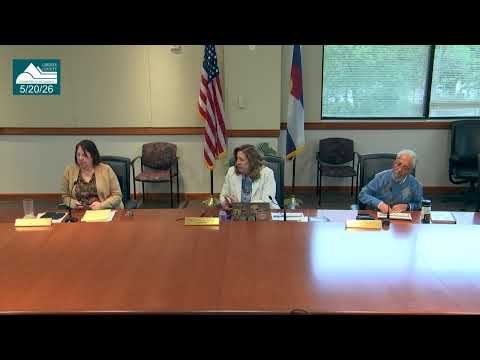
Larimer County commissioners met May 20 in Fort Collins to review emerging issues identified by county departments and to set preliminary targets for the 2027 general fund budget. Alex Jordan of the county budget team outlined revenue and expense trends, rolling out initial assumptions on personnel, operating and revenue changes and fielding commissioner questions on assessment-rate changes and the county’s monitoring of sales-tax and fuel-cost volatility.
Why this matters: The work session set the numbers that departments will use to build budget requests this summer and identified countywide risks — including legislative changes to assessment rates, uncertain state and federal pass-through funding, and possible reductions in Medicaid billing revenue — that could increase pressure on general-fund support for public-safety and human-services programs.
Jordan told the board that property-tax collections are up about 5% year over year through April and attributed shifts in county revenue outlook to recent assessment-rate changes and the reassessment cycle. He said intergovernmental revenue is down roughly 21%, largely because a one-time GOCO grant tied to a Livermore natural-resources project (about $2.5 million last year) did not continue. "We got about 60 responses" to an internal emerging-issues survey, Jordan said, and the recurring themes included rising costs, legislative and Medicaid-billing changes and uncertainty in state and federal funding.
On assumptions for initial targets, Jordan presented placeholders the board will use as departments develop requests: a 3.7% personnel-cost increase (pending HR’s mid-June compensation recommendations), a 2.5% operating-cost increase, a 2.25% increase for external revenues, a 1–3% range for intergovernmental revenues and a 2.5% placeholder for sales-tax growth. "Sales tax is volatile," he said, and the county will continue to monitor it through the summer.
Commissioners pressed staff on forecasting inputs and local impacts. Commissioner Joan Kovalas asked how the county reconciles different statewide forecasts; Jordan said staff use legislative council staff updates and other sources, including the Federal Reserve, the treasurer and the assessor, and that the county generally favors a fiscally conservative approach. County Manager Lorinda Volker and others emphasized that some economic indicators lag and that some departmental cost impacts — notably bulk fuel purchases — may appear later in the year.
Fuel costs were a focus. Commissioner Kristen Stevens asked whether the 2.5% operating increase adequately accounts for higher fuel prices; officials reported diesel has approached $6 per gallon and acknowledged some departments (road and bridge, sheriff’s fleet) face near-term pressure. Jordan said April actuals did not yet show a major hit from fuel but that impacts could emerge as tanks are replenished at higher prices.
Staff also reviewed department-level target adjustments. The assessor’s office will see a much higher target for 2027 because the reassessment cycle increases workload and appeals (Jordan cited a roughly 77% increase in that target). One-time items removed from targets included an ICares floodplain monitoring item (about $432,000) and parts of a multiyear floodplain setup (staff referenced roughly $1.3 million over three years). The county is doing 0-based budgeting this year for IT, facilities and the coroner’s office; Jordan described that review as a targeted exercise to check program staffing, revenues and expenses from the ground up.
On property taxes, Jordan noted that the county’s mill levy itself is fixed and that changes to taxpayers’ bills arise from assessment rates and valuation shifts. He summarized recent legislative assessment-rate adjustments and said the 2027 structure (including a 10% reduction on the first $700,000 of residential value and changed commercial rates) will remain until changed by the legislature. Using an example, staff said Larimer County’s portion is about 25% of a typical property tax bill; Jordan noted the county will publish tools and encourage residents to use the assessor’s online breakdown.
Next steps in the schedule: the budget software rollout and staff kickoff are imminent; departments will submit capital requests by Aug. 7 and operating requests by Aug. 14; HR will present compensation numbers in mid-June; the county will hold employee and public outreach town halls (employee town hall June 10), and the proposed budget is scheduled for submission Oct. 15 with public hearings Nov. 2–3 and final certification in December.
The work session produced no formal motions or votes. Chair Commissioner Jody Shabwick thanked staff and adjourned the meeting at 2:28 p.m.