Get Full Government Meeting Transcripts, Videos, & Alerts Forever!
Get email alerts on the Active Transportation topic
No spam. Unsubscribe anytime.
Council approves Safe Streets planning/demo grant application for three Rochester corridors
Summary
Rochester City Council authorized submitting a US Department of Transportation Safe Streets and Roads for All planning and demonstration grant for demonstration projects on 4th St SE, 3rd Ave SE and 11th Ave NW/SW. The application requires no local match; the vote passed 6–1 (Council member Palmer opposed).
The Rochester City Council on May 18 authorized staff to apply for a Safe Streets and Roads for All (SS4A) planning and demonstration grant to study and fund demonstration projects along three corridors: 4th Street Southeast, 3rd Avenue Southeast, and 11th Avenue (northwest and southwest segments).
Why it matters: The grant, administered by the U.S. Department of Transportation, supports local planning and demonstration projects to improve safety and encourage mode shift away from single‑occupant vehicles. Staff said the application builds on a locally funded safety action plan that identified these corridors based on crash history, road profiles, and safety need. The grant as described requires no local match and would fund demonstration work and planning before identifying full reconstruction projects.
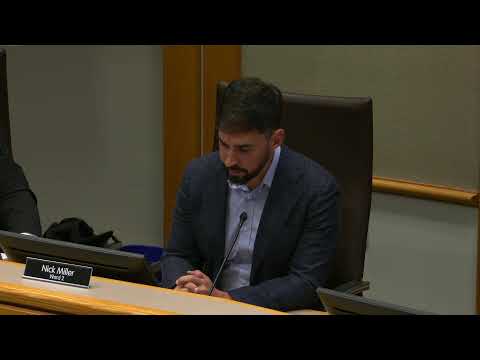
Council action: Council member Miller moved to approve submittal of the SS4A planning and demonstration grant application for demonstration projects along the three corridors; Council member Doring seconded the motion. The motion passed 6–1, with Council member Palmer voting no.
Discussion highlights: Council member Palmer expressed concern about grant‑driven commitments—saying that after accepting grant funding, the city may feel compelled to implement projects that do not fit existing corridor constraints (citing tight bottlenecked streets and ADA ramp locations). Staff (Mister Dombrowski) and supporters said the application is a cautious step focused on demonstration and planning, intended to inform future CIP decisions rather than immediately commit to major reconstruction.
Next steps: If selected, the grant would fund planning and demonstration work to test safety improvements and help prioritize corridor investments; there is no local match requirement. Council members who serve on regional planning groups noted the corridors were identified through a regional safety action planning process and earlier studies that included crash and roadway analysis.