Get Full Government Meeting Transcripts, Videos, & Alerts Forever!
Get email alerts on the School Finance topic
No spam. Unsubscribe anytime.
Prior Lake‑Savage board narrows November levy options, weighs $32 vs. $46 operating asks plus capital levy
Summary
Board members debated two operating referendum scenarios — roughly $32/month or $46/month on an average home — and whether to pair an operating ask with a $3.8 million capital levy timed to replace a scheduled debt‑service drop. Ehlers presented tax impacts; board discussed contingency language, clarity for voters and campaign strategy ahead of a June 8 action.
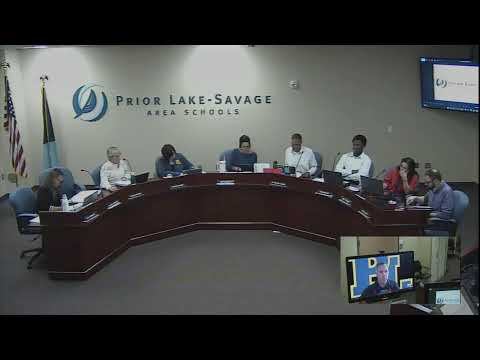
The Prior Lake‑Savage Area Schools board heard detailed tax‑impact scenarios on possible November ballot questions and spent much of a study session debating the size and structure of any levy ask.
Ehlers consultant Matthew Hammer presented two operating referendum models that the board asked its staff to refine: a revoke‑and‑replace option that would increase the district’s operating authority to roughly $1,003.86 per adjusted pupil unit (an estimated $32 per month on an average $525,000 home), and a larger revoke‑and‑replace with inflation option that would raise authority to about $1,007.41 per APU (about $46 per month). Hammer also ran a capital project levy sized to fill a roughly $3.8 million scheduled drop in debt service; that levy would effectively offset the upcoming tax decrease and could be structured as a separate second ballot question. Both the operating and capital proposals would only generate revenue for the district beginning the fiscal year after a successful November vote (one‑year lag).
Why it matters: the district’s five‑year projections show pressure on fund balance driven by declining enrollment and rising costs, particularly in special education and insurance; board members described the levy options as choices between short‑term stability and longer‑term investments. Several directors said the district needs additional revenue to avoid stepping into statutory operating debt in coming years under lower‑ask scenarios.
Board concerns and positions: the board debated whether to present a single combined ask or two questions (operating plus capital), and whether the capital question should be contingent on the operating question passing. Ehlers noted that second questions typically have a lower passage rate. Directors repeatedly stressed that ballot language must be clear — both because statutorily prescribed phrases (for example, “acquisition and betterment of school sites and facilities”) can be confusing to voters and because multiple items on the ballot (including a statewide constitutional amendment) could complicate turnout and messaging. Individual board members ranged in preference: several expressed support for the $46 option plus capital; others favored the $32 option with capital or the smaller option alone as a more politically viable choice.
What would change if a levy passes: the higher operating option would generate roughly $10–11 million in additional annual revenue under the district’s enrollment forecast and would give the board more flexibility for targeted investments. The smaller operating option would produce materially less revenue and was described by some directors as a stopgap that would carry the district only a few years. The capital levy example is designed to capture a scheduled debt‑service reduction and to be revenue‑neutral in the year it takes effect (taxable impact shown as the net of that scheduled drop versus the new capital rate).
Next steps: the administration will refine ballot language and packet materials for board action scheduled June 8. Hammer highlighted statutory deadlines (MDE 60‑day review for capital questions and an August 11 last call for operating referendum certification) and urged clarity in public communications. Directors asked for campaign‑level messaging for community outreach and for additional modeling of a step‑up/stepped approach and contingency constructs. The board did not take a final vote at the study session; members verbally recorded mixed preferences to guide staff work on the June 8 agenda.