Get Full Government Meeting Transcripts, Videos, & Alerts Forever!
Get email alerts on the Residency Verification Software topic
No spam. Unsubscribe anytime.
Eastern York SD weighs residency‑verification software to audit cyber‑school enrollments amid privacy concerns
Summary
District staff proposed a three‑year residency‑verification contract to detect students billed to the district but living elsewhere; supporters said savings could pay for the tool, while multiple board members called the approach invasive and raised concerns about data‑mining and license‑plate/utility data use.
The Eastern York School District discussed a proposal to trial residency‑verification software intended to identify students the district is funding who may no longer live inside district boundaries, with officials saying a single recovered student could pay for the first year.
Finance staff (Finance Director, speaker 2) described the software as a data‑aggregation tool that searches publicly available records, utility and address histories, and commercial data to flag possible residency discrepancies for follow-up. The proposed contract is three years with a termination‑for‑convenience clause after the first year; staff said the initial data‑ingest and verification phase will be the most resource‑intensive.
Several board members supported a short trial and a phased approach. One member noted other nearby districts have used the product and saw significant recoveries in cyber‑school tuition billing. Administrators said the plan would start by uploading a targeted list (for example, cyber‑school enrollees) so the vendor can return potential errors for staff investigation and follow-up with cyber providers.
Other board members raised strong privacy and civil‑liberties concerns. One director (Committee member, speaker 8) said she did not support "tracking our own constituency" and described the vendor methods as "data mining" involving license‑plate photos and commercial data brokers. Another member flagged the potential for the vendor’s methodologies to be used by immigration enforcement in other contexts; a proponent responded that the company uses legally available public records and commercial data sources.
Administrators said the district would not add or remove data to the vendor’s sources and would use results only as leads for investigation; they emphasized that staff would pursue relationship‑building with cyber providers rather than relying solely on automated results. Several members asked for safeguards: defined user access (two users), data‑handling protocols, clarity on exactly which public databases are queried, and a plan for parental/community outreach.
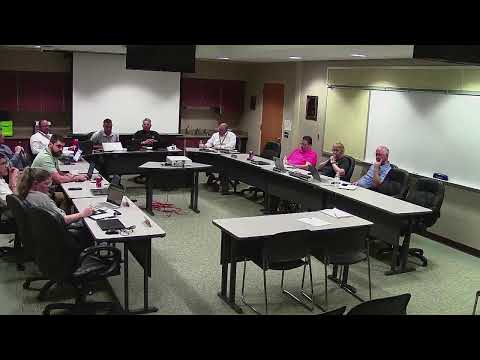
The board debated whether to move the item to the Thursday meeting for approval. Some members objected to advancing the contract without additional privacy safeguards; others said the potential financial return justified a trial. The meeting record shows the board moved to place the item on the Thursday agenda for a decision and that staff will continue vendor discussions and provide additional information on safeguards and implementation.
What happens next: Staff will return with a more detailed contract summary, user‑access controls, privacy protections, and a recommended trial scope before the Thursday vote. If the board approves, the district could start a targeted pilot, with the option to terminate after year one if results are insufficient or privacy concerns are unresolved.