Get Full Government Meeting Transcripts, Videos, & Alerts Forever!
Get email alerts on the Illegal Dumping Grant topic
No spam. Unsubscribe anytime.
Newark finance committee authorizes state grant application to address chronic dumping
Summary
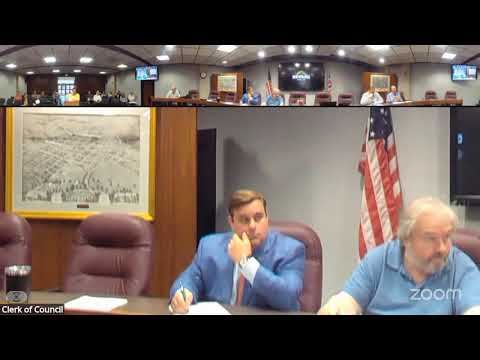
On May 18, 2026, the Newark City Council finance committee voted unanimously to authorize the mayor to apply for a state FY2026 grant to address illegal dumping. Staff said the grant can fund equipment, cleanups, lighting, signage and fencing; the committee approved the application 5-0.
The Newark City Council finance committee on May 18 authorized the mayor to submit an application to a state FY2026 grant program aimed at addressing chronic illegal dumping and related cleanup needs.
The staff presenter described the opportunity as broad in scope. “This is a grant opportunity through the state of Ohio. The city will be submitting its first application and apply for equipment, cleanups, supplies,” the staff member said, adding that staff member Lindsay Bright is gathering cost estimates for potential purchases.
Committee members pressed for clarity on the program’s focus. One committee member asked if the grant was primarily for stormwater projects; the staff member replied, “No. This is much wider,” and cited examples communities have funded, including lighting, signage and fencing to deter repeat dumping and equipment to address chronic problems such as tire dumping. “You can buy equipment. Some people have used lighting. When I say people, I mean political subdivisions. Purchased equipment to install lighting, signage, fencing,” the staff member said.
A committee member also flagged a drafting error in the item’s text, saying, “First of all, you said, ‘shine a light on dumpsters,’ which was a mistake I made when I first created it,” and asked for clarification on the problem the grant is intended to address. The staff presenter reiterated that the effort combines cleanup funding with deterrent measures targeted at persistent dumping locations.
The committee advanced the resolution by voice vote. The chair announced the motion as “by Barker, second by Chu,” and the meeting record showed the motion carried 5-0. (The committee roll call earlier listed present members as Barker, Cost, Chute, Lemley and Marmee; the motion was recorded with the second as “Chu” in the meeting minutes.)
Why it matters: Communities use these state grant programs to pay for cleanup work and for low-cost, place-based deterrents—lighting, signage and fencing—that aim to reduce recurring illegal dumping and its safety and environmental impacts.
The committee did not specify the dollar amount the city will request; staff said further estimates are being compiled before the application is submitted.