Get Full Government Meeting Transcripts, Videos, & Alerts Forever!
Get email alerts on the Noncitizen Voting topic
No spam. Unsubscribe anytime.
Committee hearing presses EAC on noncitizen voting; agency stresses state responsibility
Summary
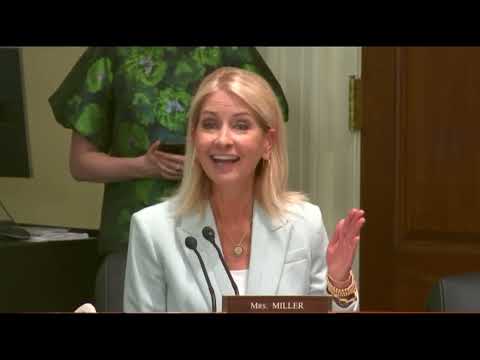
During a House Administration Committee exchange, Congressman Miller pressed an Election Assistance Commission witness on steps to stop noncitizen voting, while the EAC representative said the agency does not run elections and that voter eligibility is enforced by states.
Congressman Miller questioned the Election Assistance Commission about what steps the agency has taken to prevent noncitizen voting, pressing the point that citizens deserve secure elections and urging federal action.
In opening remarks, Congressman Miller said citizens "deserve secure elections" and asserted that public confidence is "dwindling" amid concerns about fraud. He raised the Save America Act and cited "HR 87 21, the preventing foreign interference in American elections act," saying those measures would curb foreign influence and ballot-harvesting funding.
Miller asked Mr. Hicks what the EAC had done to mitigate illegal votes cast by noncitizens. Mr. Hicks, an Election Assistance Commission official, replied that "states run the elections" and that determining voter eligibility is a state responsibility, adding that it is illegal for noncitizens to vote. He stated, "The EAC does not run elections, so we can't do anything to ensure that," and framed the agency’s role as constrained by its lack of authority over state-run voter eligibility processes.
Miller pressed that the federal government could require photo identification and proof of U.S. citizenship if it were to fund elections nationally and argued the EAC should take steps to mitigate noncitizen voting. He tied those proposals to the Save America Act, saying passage of that legislation would allow the federal government to require such proofs.
There was no formal response in the hearing record that established a federal enforcement mechanism from the EAC for determining voter eligibility; Mr. Hicks repeatedly emphasized the limits of the agency’s role and pointed committee members toward state procedures.
The exchange highlights a central tension raised in the hearing: members advocating federal standards to address perceived vulnerabilities versus agency witnesses describing statutory and operational limits on federal authority. The committee did not vote or issue formal direction on this point during the recorded exchange.
The committee moved on after the questioning; no formal motions or votes relating to EAC authority or federal voter ID requirements are recorded in the transcript.