Get Full Government Meeting Transcripts, Videos, & Alerts Forever!
Get email alerts on the Municipal Budget topic
No spam. Unsubscribe anytime.
Bakersfield reviews FY 2026–27 budget, staff flags $11.5M PSVS transfer and optional CIP choices
Summary
At a May 18 budget workshop the Bakersfield City Council heard department presentations and a Measure N oversight report, reviewed proposed personnel reductions and capital priorities, and moved to receive and file the reports ahead of a June 10 public hearing. Staff recommended holding some discretionary one‑time projects in contingency.
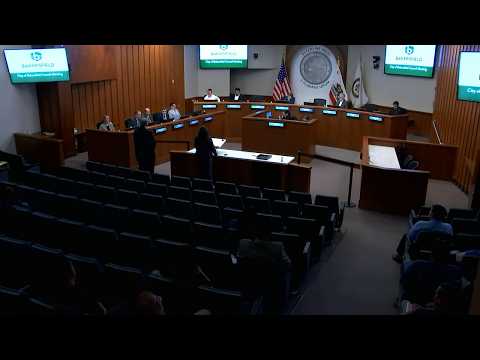
Bakersfield City Council held a department‑head budget workshop on May 18 to review the proposed fiscal year 2026–27 operating and capital budgets, hear recommendations from the Measure N (PSVS) oversight committee and accept public input ahead of the June 10 public hearing.
City staff presented updated general‑fund estimates of roughly $444 million and said they were able to reduce the PSVS transfer to the general fund to $11.5 million (down from $12 million) through a package of operating and personnel reductions. Christian Clegg, the city manager, said the combination of 73 vacant position eliminations and operating cuts produced about $17 million in reductions overall and helped reach the administration’s 5% personnel‑cost target.
The meeting included department presentations from human resources, technology services, public works, development services and water. Highlights included a $3.2 million HR budget with a hiring freeze and the planned ERP transition; technology requests that include three capital projects tied to the regional public safety radio; and public‑works programming that adds larger sewer collection and SB1/RCP road projects to the CIP.
Council and staff also walked through two lists of capital priorities: a staff-recommended set of projects they described as “can’t wait” and a longer optional list that could be funded from about $2 million of general‑fund one‑time money and roughly $3 million of PSVS one‑time money. Council members discussed placing optional funds in contingency pending updated sales‑tax reports and broader fiscal monitoring.
On the water and sewer side, staff outlined a proposed sewer rate increase and said some capital projects had been paused pending final rate adoption. Wastewater staff urged that, while grants and revolving‑loan funds exist, many large projects are several years from final design and thus can’t be relied on today to replace rate revenue.
A single, brief formal action was recorded: Council member Gonzales moved to receive and file the presentations; the clerk announced the motion approved (with council members Core, Weir and Komen absent). The council’s next formal step on the budget is the June 10 public hearing and deliberation.
Why this matters: the choices the council makes in June will determine staffing, capital projects and whether the city phases larger investments such as sewer plant upgrades or sets aside more to a Section 115 trust to cover pension liabilities. Staff and the Measure N oversight committee both urged fiscal prudence while presenting different views on program priorities.
The council adjourned at 2:54 p.m.