Get Full Government Meeting Transcripts, Videos, & Alerts Forever!
Get email alerts on the Local Economic Development topic
No spam. Unsubscribe anytime.
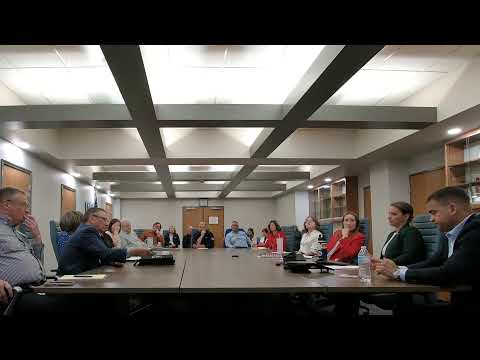
Findlay City Council hears city adviser on incentives and votes to establish post‑1994 CRA framework
Summary
At a council meeting, municipal adviser Andrew briefed council on TIFs, CRAs and new community authorities; council voted to place establishing legislation for post‑1994 CRAs on a future agenda to allow consideration of those incentives in Findlay City.
The Findlay City Council received a detailed briefing on local development incentives and financing tools and voted to move forward with establishing legislation that would allow the city to consider post‑1994 community reinvestment areas (CRAs) in future projects.
Andrew, a municipal adviser engaged by the city through Bradley Kane and the Incentives Guru Group, told council that incentives such as tax increment financing (TIF), CRAs and new community authorities (NCA) are commonly used across Ohio to fund infrastructure, remediation and land acquisition for development. "I live and breathe this stuff night and day almost," he said, summarizing why the city asked for the briefing.
Why it matters: post‑1994 CRAs and other incentive tools change who must be compensated (notably school districts) and for how long. Andrew explained key distinctions: non‑school TIFs can be structured as a 10‑year, 75% exemption without school approval, whereas longer terms generally require school consent; a post‑1994 CRA may allow 100% vertical abatement for 15 years in certain cases. He also described minimum service payment and development agreements that protect bondholders and municipalities.
What the council discussed: council members and staff asked how taxable value is calculated versus claimed developer investment, how parcel‑level TIF start dates affect administration, and the fiscal impacts on local school funding formulas. Staff warned that some county auditors now divert certain collections directly to school districts and emphasized the need for clear paperwork and intergovernmental agreements. A staff member described the proposed establishing ordinance as a framework that would allow the council to consider individual CRAs on a case‑by‑case basis rather than automatically applying incentives citywide.
Action taken: a council member moved that the city proceed with establishing the post‑1994 CRA authority; the motion was seconded and approved by roll call. The clerk recorded members answering "Aye" on the motion; the motion passed and the establishing legislation will be scheduled for readings on a future council agenda.
Details and context: Andrew gave local and statewide examples, including phased TIF use for large projects, NCAs used for stadium and large‑site development, and single‑family CRA usage in some communities. He urged careful negotiation with school districts and recommended term sheets and minimum service payment agreements to ensure the city is protected if taxable values or payments fall short.
Next steps: staff said it will circulate the draft establishing ordinance language and that developing a more detailed framework (including possible school agreements and committee review by finance and strategic planning) will likely take additional meetings. For now, the council voted only to add the establishing legislation to a future agenda; no specific CRA was approved for a particular site at this meeting.