Get Full Government Meeting Transcripts, Videos, & Alerts Forever!
Get email alerts on the Wildlife Conservation topic
No spam. Unsubscribe anytime.
Resident urges protection of osprey nesting habitat at Pillager school fields
Summary
A longtime Pillager resident told the meeting that the community's athletic fields and nearby waterways provide ideal nesting habitat for osprey, describing their feeding needs, nesting behavior and local observations; no formal action was recorded in the transcript.
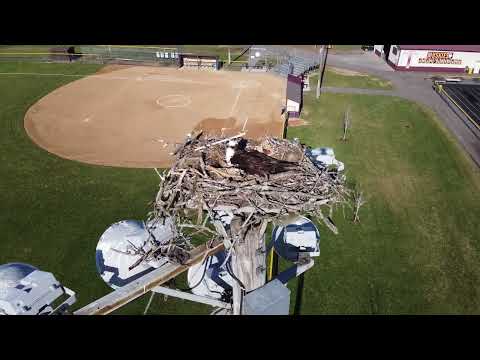
A resident who said they have lived in Pillager for 23 years urged attention to osprey nesting at the town's school fields, saying, “we have had osprey nesting out here every year that I have been here.” The comment came during public remarks and focused on the birds' habitat needs and behavior.
The speaker said osprey favor wide-open fields with an isolated tree and typically nest within about 10 to 12 miles of shallow water, because they dive only about 3 feet to catch fish. “They can only dive about 3 feet deep,” the resident said, adding that the birds feed on fish and favor prey by size rather than species.
The resident described the species' nesting behavior: males collect sticks while females shape and line the nest with leaves, vines and grass. The speaker said osprey often reuse the same nest for years and that nests can grow to roughly 10 feet across and deep. “They'll reuse that nest, year after year,” the resident said.
On breeding and timing, the speaker said females are larger, pairs lay about one to four eggs, incubation lasts roughly 50 days, and the young usually fledge and leave the nest in late August while parents depart earlier on migration.
Summing up, the resident said Pillager’s combination of rivers, creeks and lakes near open athletic fields makes the area “perfect habitat” for osprey. The transcript of the remarks does not record any formal motion or vote tied to the comment.