Get email alerts on the Transportation Plan topic
No spam. Unsubscribe anytime.
Pine County approves $60 million transportation plan with major resurfacing and bridge work
Summary
The Pine County Board approved a $60 million expansion to its five-year transportation plan, directing staff to pursue about 142 miles of resurfacing and six bridge replacements and to begin project development, permitting and public notification.
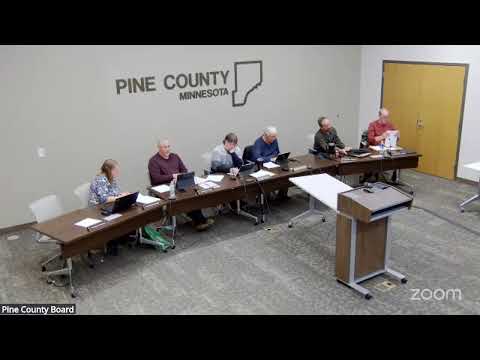
The Pine County Board on May 12 approved an expanded transportation improvement plan that county staff said would fund roughly $60,000,000 in projects over the planning period. Mark, the county transportation presenter, told the board the package includes about 142 miles of resurfacing work and six bridge replacements intended to address deficient structures and extend pavement life.
The plan is a planning document to prioritize staff time and project development, Mark said, and “it gives the public an idea” of where projects may occur and when. He described a goal of a 20-year pavement life cycle and said bridge projects can be costly but yield longer-term benefits: “Those are 75 year projects,” he said of major bridge replacements.
Aaron, a public works project manager, gave project-specific updates, saying crews are paving about 20 miles this year and that work on the Moosehorn River bridge will reopen to traffic in roughly a month. He also said design and permitting for the Snake River bridge in Pine City are on schedule and that the county hopes to begin construction in early 2027 and do as much work as possible before state DNR fish-timing restrictions take effect.
Board members asked for clarification about funding splits for intersection signals and cost-sharing with cities; Mark said Pine City will contribute 25 percent on a specific signal project. Commissioners also discussed dust-control and detour costs for projects and staffing constraints in executing a large program.
After discussion, a motion to approve the transportation improvement plan was moved and seconded and passed by voice vote; the meeting minutes record all in favor as “aye.” The board did not record a roll-call tally in the transcript.
The approved plan directs county staff to continue project development, permitting and public outreach; many projects will require months to years of design and environmental review before construction.
AI generated
The text on this page is AI generated. Summaries, highlights, analysis, and video transcripts are all produced from the original source material.
AI can make mistakes, so if you spot one, and we will fix it for everyone.
Note: the source content is unaltered by us. Any content source we link to, be it a video, an audio recording, or a document, is presented exactly as its publisher released it. That publisher is usually a government body, sometimes an individual official or another organisation.