Get Full Government Meeting Transcripts, Videos, & Alerts Forever!
Get email alerts on the Ems Finance And Operations topic
No spam. Unsubscribe anytime.
Columbia County weighs a new MSTU to bolster ambulance coverage as contractor struggles with staffing
Summary
County leaders reviewed a study showing contractor staffing shortfalls and options to fund added ambulances through a municipal service taxing unit (MSTU). Staff outlined cost scenarios, timelines and training plans; commissioners directed staff to pursue legal work and a public hearing but took no final vote.
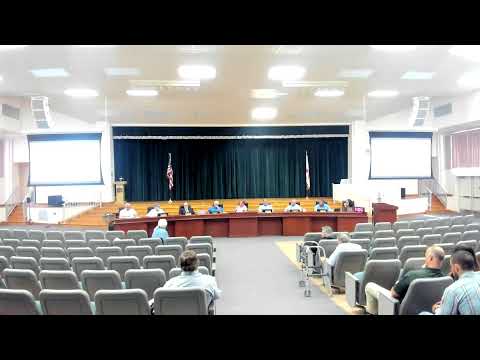
Columbia County commissioners and staff on Tuesday reviewed a study and options to fund emergency medical services, including creating a municipal service taxing unit (MSTU) to finance additional ambulances and staffing.
The workshop followed presentation of a revised study (issued May 20) and performance data for AmeriPro, the county’s private ambulance contractor. Agency official (S7) said AmeriPro’s urban response compliance rose from about 56% to roughly 70% in May, with rural response near the mid-60s, but added the company had not met minimum staffing levels during its 60‑day ramp-up. “They’re still having staffing issues,” the official said, summarizing contract performance.
The board heard that the MSTU is a dedicated levy, not an assessment, and that it must be adopted through a legal ordinance process involving public hearings and (if applicable) concurrent action by the city of Lake City and the town of Fort White. Presenter (S3) told commissioners the county would need an adopted ordinance by July 1 to place a tax in effect for an October or November implementation; preliminary millage deadlines still apply under the county budget calendar.
Why it matters: County staff and commissioners said rural response gaps and high per‑unit call volumes make additional, county‑controlled ambulances more effective at improving response times than relying solely on the private contractor. County comparisons showed neighboring rural counties typically run about 1,500 calls per ambulance annually; Columbia County’s per‑unit workload is much higher, driving burnout and equipment wear.
Cost scenarios and tradeoffs
Staff presented three budget scenarios. Levying an MSTU to replace the current private contract cost (about $1.6 million) would equal roughly 0.3645 mills using the county’s taxable value, staff said. Adding two county ambulances (including capital purchases and personnel) independent of the contract produced a worst‑case estimate of roughly $3.88 million (about 0.8236 mills). A combined scenario—retaining the contract while adding county ambulances—yielded an illustrative total near $5.59 million or about 1.1867 mills; presenters stressed those numbers would change as staff sharpen the assumptions and as potential donations or hospital authority support are confirmed.
Presenter (S3) summarized the figures and caveated the revenue timeline: billing revenues, if the county runs its own transport and contracts out billing, would lag roughly six months and collection rates vary. “Even if you started billing day one, you’ve been through insurance before—you know how long it takes,” Presenter (S3) said.
Operations and staffing recommendations
Staff and commissioners discussed a phased approach: start with two ambulances (one in the county’s north end and one in the south) and add units over several years—two per year was offered as a multi‑year build plan. Agency official (S2) said each 24/7 ambulance typically requires about six full‑time equivalents to cover shifts, vacations and leave; commissioners discussed using PRN or part‑time pools and partnering with local colleges and high schools to recruit EMTs and paramedics via dual‑enrollment, scholarships and employer‑sponsored training.
Staff urged the county to contract out billing and collections rather than attempt internal collections; presenters cited collection rates of roughly 60–75% from comparable counties as planning assumptions, while collection/administration fees to the billing vendor are typically a percentage of collected revenue.
Public comment and historical context
During public comment, longtime residents recounted past county efforts to operate its own rescue service, recent contract rebids and operational failures from earlier private vendors. One commenter who identified himself as a resident and longtime observer urged the county to pursue county‑owned EMS in the long term to avoid recurring service crises and potential litigation.
Next steps
Commissioners did not take a binding vote at the workshop. Staff asked permission to pursue the legal framework for an MSTU ordinance, to approach the Lakeshore Hospital Authority about capital support (ambulance donations or purchases), and to return with detailed staffing, capital and billing spreadsheets. Chair (S1) and several commissioners signaled support to move forward with studies and to hold the public hearings required by statute; Presenter (S3) said a public hearing on an ordinance could be calendared for June 18 if the board authorizes staff to proceed with the legal work. The board adjourned with direction for staff to bring back refined cost estimates, implementation timelines and contracting options.