Get Full Government Meeting Transcripts, Videos, & Alerts Forever!
Get email alerts on the Rulemaking Oversight topic
No spam. Unsubscribe anytime.
Committee hears REINS‑style bill and proposal to create ROAR oversight committee
Summary
Vice Chair Aragona and sponsors told the Rules Committee a REINS-style measure (HB 58‑17) would require active legislative consideration of major agency rules and HB 58‑18 would create a standing ROAR committee to review major and nonmajor rules, with a $1,000,000 annual impact threshold for 'major' rules.
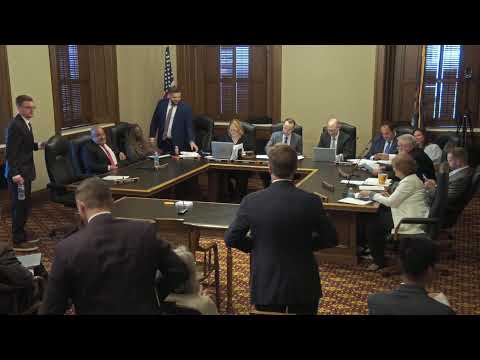
The House Rules Committee on May 14 heard testimony on two related proposals to increase legislative oversight of executive-branch rulemaking.
Vice Chair Aragona described House Bill 58‑17 as a REINS‑style statute meant to "return some more power back to the legislator," requiring agencies to classify rules as major or nonmajor, provide cost‑benefit information to legislators, and obliging the Legislature to act within the legislative period for major rules. Aragona said that, if approved by the Legislature, a promulgated major rule would take effect for five years before further legislative review.
A sponsor also presented House Bill 58‑18, which would create a standing Joint Committee on Regulatory Oversight and Administrative Review (known in the bill as ROAR) consisting of five members from each chamber, with a majority/minority party composition specified and simple‑majority voting rules for most actions. The bill defines a "major rule" to include a proposed rule that is likely to cause significant annual economic impact of $1,000,000 or more or have significant adverse effects on competition, employment, investment, productivity or social and cultural relations among citizens.
Committee members asked how the bills would interact with the existing Joint Committee on Administrative Rules (JCAR) process, whether rules would still go into effect automatically if legislators failed to act, and whether other states had measurable outcomes after adopting similar statutes. Aragona and sponsors said comparative data from peer states could be provided later; they said the bills are intended to require active legislative consideration rather than passive automatic adoption.
The committee also read proponent cards from multiple business and policy groups indicating support for increased legislative oversight, including ABC of Michigan, NFIB, AFP of Michigan, Michigan Farm Bureau, Mackinac Center for Public Policy, Michigan Chamber of Commerce and the Pacific Legal Foundation.
The hearing record shows questions and discussion but no final committee vote on the REINS measure or ROAR proposal at this meeting.