Get Full Government Meeting Transcripts, Videos, & Alerts Forever!
Get email alerts on the Learning Lab topic
No spam. Unsubscribe anytime.
EAC officials and local election administrators praise Learning Lab, push for wider outreach and funding
Summary
The U.S. Election Assistance Commission heard wide praise from state and local election officials for its Learning Lab training platform, discussed using certification and targeted outreach to expand participation, and explored new module ideas and funding evidence to sustain the free program.
The U.S. Election Assistance Commission on Friday convened a public meeting to review the EAC’s Learning Lab training platform and to gather feedback from local and state election administrators nationwide.
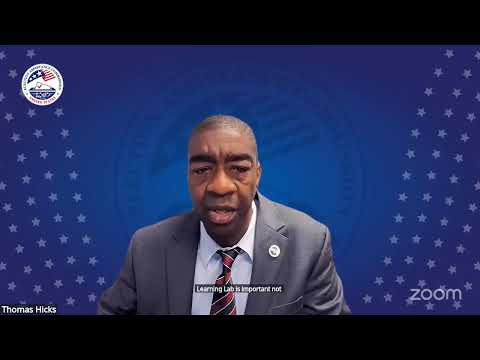
Chairman Thomas Hicks opened the session, which commissioners and staff used to solicit user experience and suggestions for expanding the program’s reach. "Training programs ensure new and experienced officials have up-to-date knowledge needed to conduct safe, secure and accurate elections," Hicks said as he called the meeting to order.
Kim Smith, a senior subject-matter expert at the EAC, reviewed the Learning Lab’s origin and scope. Developed after a 2022 staff review and soft-launched in September 2024, Smith said the on-demand platform now hosts roughly 40 courses in seven categories, offers in-person sessions, and remains free to users. "We trained over 3,400 election officials in person last year, and we're on course to train over 3,000 officials again in 2026," Smith said, and the agency is preparing a recognition program to give users federal acknowledgment for completing course paths.
Panelists from across the country described how they use the Learning Lab. Wesley Wilcox, supervisor of elections in Marion County, Florida, said the certification pathway encouraged staff participation. "I actually ended up finishing the 30 in, like, 4 days," Wilcox said, describing how he then shared the program with his team and saw rapid local uptake. Dustin Zarny, commissioner of elections in Onondaga County, N.Y., and others praised the module design, saying bite-sized lessons and quizzes made the material easier to assign to new employees.
Officials characterized the program as especially valuable for jurisdictions with limited travel and training budgets. "For the smallest counties that might have one full-time employee, getting away for training is hard," said Andrew Boller, assistant deputy secretary of state for Nebraska. He and others said the Learning Lab lets small offices engage at their own pace and bring new staff up to speed faster.
Panelists recommended steps the EAC could take to expand participation and to justify additional funding. Common suggestions included:
- Promote a federal recognition or certification as an incentive to sign up and complete core modules; Wilcox and others called the certificate a key "hook." - Use targeted communications—state newsletters, email alerts when new modules post, and regional outreach—to raise awareness among county officials and conference organizers. - Offer regional, facilitator-led workshops as a middle ground between purely on-demand content and fully in-person training, and provide supervisors with progress trackers for staff certifications.
Commissioners flagged the need for both qualitative and quantitative evidence to support funding requests. "Anecdotes are wonderful, but it's the mixture of quantitative and qualitative that will make the case," said panelist Amy Sams, urging the EAC to collect data on users’ experience levels and how the training changes office procedures.
Panelists also proposed new topics: practical explainers (HAVA and NVRA overviews), hash-verification and audit procedures, website and print accessibility, continuity-of-operations planning, de-escalation and observer-management training, ballot-programming and design, social-media and media-handling modules, and basic cybersecurity for low-IT offices. Several recommended keeping pilot projects funded to test and refine content before wider rollout.
The commissioners noted the Learning Lab’s no-cost model is an access advantage but acknowledged that sustaining and expanding the program may require additional resources from Congress. Hicks said commissioners recently testified on Capitol Hill about the program’s benefits and savings to states and asked participants to continue providing feedback.
Procedural items during the meeting included a motion to approve the day's agenda, which was moved and approved by voice vote, and a motion to adjourn at the meeting’s close.
The EAC said three test decks (a 52-scenario general deck, a poll-worker deck and a disaster deck) are available through its clearinghouse for election offices seeking hands-on exercises. The commission said it will roll out the recognition program to all Learning Lab users in the coming weeks and will continue collecting input from states and local officials to guide future modules and outreach plans.