Get Full Government Meeting Transcripts, Videos, & Alerts Forever!
Get email alerts on the Supreme Court Reform topic
No spam. Unsubscribe anytime.
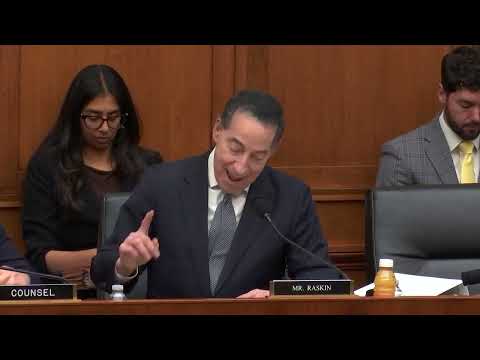
Lawmaker at House Judiciary hearing decries "court packing" and unveils SCOTUS Act to shift review power
Summary
A lawmaker on the House Judiciary Committee said recent Senate confirmation tactics produced a conservative Supreme Court majority and introduced the "SCOTUS Act," a bill to move the Court's certiorari agenda-setting to a panel of federal circuit chief judges.
A lawmaker on the House Judiciary Committee opened the hearing by calling the current composition of the U.S. Supreme Court a "legitimacy crisis" and arguing that Senate confirmation decisions in 2016 and 2020 produced a conservative majority that now shapes major rulings.
"Court packing, like justice itself, lies in the eye of the beholder," the lawmaker said in remarks directed to the committee chair. He recounted that after Justice Antonin Scalia's death in February 2016, then–Senate Majority Leader Mitch McConnell announced the Senate would not consider a replacement, leaving the nominee Merrick Garland without a hearing for nearly 11 months. The speaker said that when President Donald Trump took office, Neil Gorsuch filled that seat after a period the lawmaker described as 422 days.
The lawmaker also cited Justice Ruth Bader Ginsburg's death on Sept. 18, 2020, and the subsequent confirmation of Amy Coney Barrett within weeks. "So right there, we've got 2 seats officially stolen by Mitch McConnell and the Republican senate," he said, arguing those vacancies helped produce what he called a "6-3 mega court." He pointed to the 2020 election outcome—"Biden won that election by more than 7,000,000 votes" and an Electoral College margin of "306 to 232"—to underscore his contention that several current justices were nominated by presidents who lost the popular vote.
The lawmaker framed the Court's recent decisions as evidence of that shift. Citing historical rulings including Dred Scott and Plessy v. Ferguson, he contrasted periods of court rulings that expanded rights with what he described as a return to a conservative baseline. He said the Court has "pluck[ed] a doctrine out of thin air" to create protections for presidents from criminal liability and criticized recent rulings on abortion and voting rights as examples of decisions that, in his view, have diminished civil rights protections.
To address what he described as an agenda-setting problem, the speaker introduced legislation he called the "SCOTUS Act." Under the proposal outlined in his statement, a panel composed of the chief judge of each federal circuit, or their designees, would decide whether a meaningful circuit split or federal question should be taken up by the Supreme Court, instead of leaving that authority solely to the justices. "We should have a panel made up of the chief judge of each federal circuit or their designee ... and they should decide when there is a meaningful circuit split or a federal question that should go up to the Supreme Court," the lawmaker said.
The lawmaker urged the committee to consider structural reforms that would, in his view, reduce what he described as partisan manipulation of Court vacancies and agenda-setting. He concluded his opening statement by thanking the chairman and yielding back.
The measure was described in the hearing as newly introduced; the committee did not vote on the bill during the speaker's remarks and no formal motion or vote was recorded in the transcript.