Get Full Government Meeting Transcripts, Videos, & Alerts Forever!
Get email alerts on the Judicial Integrity topic
No spam. Unsubscribe anytime.
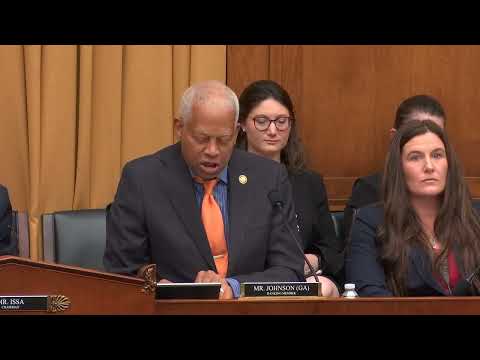
House Judiciary Committee member says conservative movement reshaped Supreme Court, urges accountability
Summary
At a House Judiciary Committee hearing, a committee member argued the conservative legal movement reshaped the Roberts Court to favor wealthy interests, citing specific allegations about taxpayer-funded benefits for January 6 participants and wealthy donors' influence and calling for public accountability.
A member of the House Judiciary Committee used an opening statement at a committee hearing to sharply criticize the Supreme Court and the conservative legal movement, saying the court now serves corporate and wealthy interests rather than ordinary Americans.
"Last summer, Kash Patel took a taxpayer funded snorkel tour of Pearl Harbor," the committee member said, adding that the Trump administration "just created a taxpayer funded $1,800,000,000 relief fund for January 6 insurrectionists" purportedly in exchange for dropping a "$10,000,000,000 lawsuit" against the IRS. The member tied those examples to broader concerns about judicial impartiality and public accountability.
The member traced the problem to a decades-long strategy, citing the early 1970s Powell memo and saying wealthy donors and corporate interests "spent billions of dollars to reshape the judiciary in their image." The statement named Elon Musk, the Koch brothers, Leonard Leo and Harlan Crowe as examples of powerful interests that have helped reshape the Court, and said the Roberts Court is the culmination of that effort.
"This court has decimated reproductive freedoms ... It has granted Trump vast immunity ... And now the court has put the nail in the coffin of the Voting Rights Act," the committee member said, linking recent rulings to the alleged ideological shift on the bench. The member warned that these developments risk creating what they called "Jim Crow 2," arguing that some voters face new legal barriers that dilute their access to the ballot.
Throughout the statement the member framed the hearing as an effort to explain how the court reached this point and to press for accountability. The speaker closed by urging the public to understand "how we got to this moment" and saying the American people "deserve accountability for the damage that has been done." The member then yielded back to the chair.
The committee did not vote or take formal action during the remarks recorded in the transcript; the statement set the stage for subsequent discussion with witnesses during the hearing.