Get Full Government Meeting Transcripts, Videos, & Alerts Forever!
Get email alerts on the Public Safety topic
No spam. Unsubscribe anytime.
Longmont officials outline multi-year public safety staffing gap and ask council to consider funding options
Summary
Longmont staff and chiefs told council that calls for service have grown faster than staffing, estimating a multi-year need for additional police, fire and professional positions; staff asked the council whether to return with funding options — including a possible sales-tax measure — and council directed staff to bring multiple options back for review.
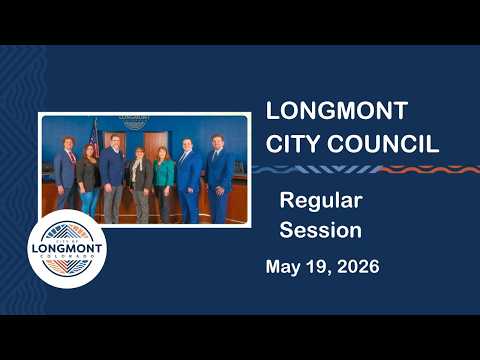
City public-safety leaders told Longmont’s City Council on May 19 that increasing call volume, more complex incident requirements and new compliance work have left police, fire and supporting teams stretched and below benchmark staffing.
Zach Artis, assistant city manager for public safety, said Longmont now handles more calls for service while operating lean compared with national and regional benchmarks. He described a staged 10-year staffing plan that would add positions in two phases; phase one (2027–2031) would add approximately 55 positions with ongoing salary-and-benefit costs estimated at about $11 million, and phase two (2032–2036) would add additional positions to close the longer-term gap. Artis said “efficiencies alone cannot close the gap” and framed the discussion as how to match staff to the community’s expected level of service.
Police Chief David Moore and Fire Chief Dan Higgins explained why workloads have expanded: new legislative reporting requirements, body-worn-camera evidence handling, complex investigations, and higher expectations for discovery and documentation have multiplied the time spent on routine and higher-priority calls. Chief Moore gave a comparative example showing some domestic-violence investigations now take roughly three to four times longer than they did in 2008, and he said evidence-handling now includes hundreds of thousands of digital items that must be processed and labeled.
Council members asked detailed questions about funding mechanics and timing. Staff said the public-safety fund has been strained by collective-bargaining cost increases and that the general fund bears some public-safety staffing costs. Theresa Malloy, assistant chief financial officer, described use-tax volatility and an earlier draw on the stabilization reserve in 2025; she said staff used targeted hiring freezes and other expense controls to reduce the draw to $1 million. Artis and staff asked whether council wanted them to return with options for a public-safety funding measure. Councilors expressed support for seeing a range of options — bonding for capital, combinations of property and sales-tax approaches, or a dedicated sales-tax increase — and asked staff to analyze less-regressive alternatives and the timing and packaging for a potential ballot measure. Mayor and council also requested details on how one-time capital and ongoing staff costs could be balanced.
What happens next: Staff will prepare funding options (including less-regressive alternatives, bonding scenarios and possible public-safety sales-tax increases) and return to council with analyses in time to meet ballot scheduling deadlines if council chooses to refer a measure.