Get Full Government Meeting Transcripts, Videos, & Alerts Forever!
Get email alerts on the Civilian Protection topic
No spam. Unsubscribe anytime.
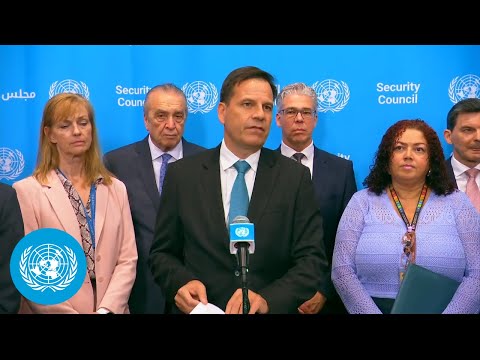
Presenter reads joint commitments from 86 delegations to keep civilian protection central amid U.N. reforms
Summary
A presenter read joint commitments from 86 delegations urging that protection of civilians remain a core political priority across the United Nations system, call for accountability, and seek sustained flexible funding for local protection actors amid reforms and budget pressure.
A presenter read a joint statement on behalf of 86 delegations during Protection of Civilians Week, saying that ‘‘today, more than 130 armed conflicts are affecting hundreds of millions of civilians worldwide’’ and urging the United Nations to keep civilian protection central amid institutional reform and budgetary strain.
The joint commitments, read aloud by the presenter, lay out three core pledges: make protection of civilians a core political priority across U.N. bodies, support reforms that sustain field-level protection capacities, and prioritize civilian protection when budgets are reduced, including by providing sustained, flexible funding to local and national protection actors.
Why it matters: Delegations said rising conflict and shrinking resources create a ‘‘stark paradox’’ in which need for protection increases as institutional capacity and political consensus come under strain. The statement links those risks to reforms across the humanitarian system and to budget pressures, and it calls for political action, unimpeded humanitarian access, and accountability when civilians or humanitarian personnel are harmed.
The first pledge asks U.N. bodies ‘‘including the Security Council [and] the General Assembly’’ to elevate civilian protection and to use diplomacy and mediation to prevent escalation. The presenter said signatories will ‘‘advocate for systematic investigations and prosecution of suspects, acknowledgement of harm caused, and meaningful amends to affected civilians,’’ and will press for respect for international humanitarian, human-rights, and refugee law.
On accountability and access, the statement commits signatories to ‘‘timely, consistent, and decisive political action’’ wherever civilians face serious harms, to advocate for ‘‘safe, rapid, and unimpeded humanitarian access to all civilians in need,’’ and to seek accountability for attacks on humanitarian personnel.
The second pledge endorses support for ongoing reform processes (the statement references ‘‘UN 80 and other reforms’’) but stresses that reforms should ‘‘strengthen rather than weaken protection outcomes for civilians’’ and preserve development and human-rights pillars. The statement also calls for a ‘‘humanitarian reset’’ that enables principled humanitarian action while protecting local actors from increased operational risk.
On financing, the third pledge urges that budget reductions and austerity ‘‘do not undermine the protection functions’’ and that resources be allocated to protect civilians. The presenter read that signatories will ‘‘strive to provide sustained, flexible, and direct funding to local and national protection’’ and to ‘‘guide resource allocation decisions with a view to protect civilians.’’
The reading repeatedly emphasized the moral and legal imperative: ‘‘Civilians must be protected,’’ the presenter said, calling protection both an obligation under international law and a moral duty. The presenter concluded by thanking listeners.
The statement lists the coordinating organizers of Protection of Civilians Week as UN OCHA, the Center for Civilians in Conflict, the International Rescue Committee and Switzerland; it was read on behalf of 86 delegations. No formal vote or motion was recorded in the transcript.