Get Full Government Meeting Transcripts, Videos, & Alerts Forever!
Get email alerts on the Seattle Center Renovation topic
No spam. Unsubscribe anytime.
Council transportation committee backs framework to modernize Seattle Center, recommends bond planning
Summary
The committee recommended adoption of Resolution 3 2 2 0 5, a joint mayoral-council framework to assess Seattle Center’s long-term capital needs, advance project scoping and public engagement, pursue decarbonization and leverage public-private partnerships, and to explore a voter bond measure by 2027; the committee voted 5-0 to send the recommendation to full council.
The Seattle City Council transportation committee voted 5-0 on May 21 to recommend adoption of Resolution 3 2 2 0 5, a joint mayoral-council framework that asks the executive to scope Seattle Center’s long-term capital and modernization needs, advance design work and public engagement, and explore funding options including a potential voter bond by the end of 2027.
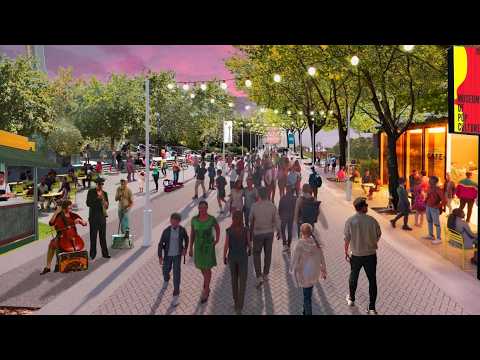
Chair Rob Sacca opened the meeting by calling Seattle Center a civic and cultural hub whose core infrastructure — much of it dating to the 1962 World’s Fair — is badly deferred. The resolution, jointly authored by the council and mayor’s office, directs the executive to complete capital planning tasks such as a 30% design for the Armory modernization, identify priority safety and accessibility projects, consider measures to decarbonize the central plant, and seek non‑city matching funds as part of a potential bond package.
Deputy Mayor Brian Surratt and Acting Seattle Center Director Randy Engstrom described the campus as a 74‑acre destination that draws millions of visits and supports thousands of jobs. Engstrom said the Center’s steam plant and aging HVAC systems are at risk and that modernization could both reduce the campus’s carbon footprint and create union jobs. Rob Johnson of the Seattle Center Foundation and labor representatives including Nicole Grant of IBEW Local 46 and Jennifer Bacon of IATSE Local 15 backed the plan, arguing it would preserve public programming, reduce event setup inefficiencies and provide employment opportunities for local workers.
Council members asked staff to clarify scope and timing. Councilmember Foster and staff emphasized that the resolution is exploratory and does not commit the council to particular projects now; it requests planning, public engagement, and a budget request for next steps. The resolution specifically calls for analyzing funding options — including county, state and federal grants, public‑private partnerships, and a voter bond — and asks the executive to assess impacts on city taxes and affordability. Staff said a condition of future bond issuance could require commensurate non‑city funding.
Councilmember Sacca moved the committee recommendation to adopt the resolution; it was seconded and approved in a roll call vote (Kettle: Aye; Lynn: Yes; Rink: Yes; Foster: Yes; Osaka: Aye). The committee will forward the recommendation to the full City Council on June 2, 2026 for final consideration.
The resolution lists the Armory explicitly in scope and calls for a refreshed veterans memorial, a prioritized capital plan, and attention to equity, labor partnerships and accessibility. Staff and panelists said additional scoping — including whether nearby facilities with capital needs should be included — will require further analysis and public engagement, and that legal and budget details will be refined before any ballot measure is finalized.
What happens next: the committee’s recommendation will go to full council on June 2. Executive staff, Seattle Center, and partner organizations will return with more detailed planning, budget requests and public engagement plans ahead of any decision to place a ballot measure before voters.
Quotes used above are attributed to speakers who identified themselves during the meeting.