Get Full Government Meeting Transcripts, Videos, & Alerts Forever!
Get email alerts on the Zoning Energy topic
No spam. Unsubscribe anytime.
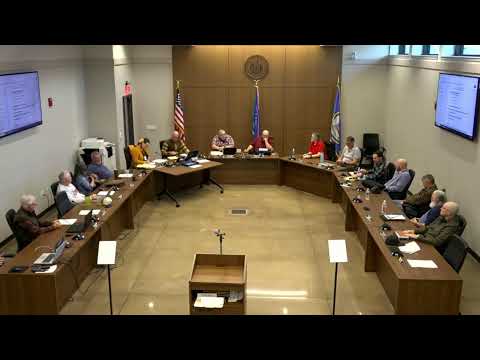
Sawyer County board adopts solar ordinance, extends moratorium and sends data‑center language back to zoning committee
Summary
The county adopted a new solar energy system ordinance (v3.1) and extended an existing solar moratorium six months to allow implementation; the board tabled a separate data‑center ordinance and referred it to the Zoning Committee for clearer definition after concerns it could include small telecom hubs.
The Sawyer County Board of Supervisors on a voice vote adopted a new county solar energy system ordinance (version 3.1) and approved a six‑month extension of the county's existing solar moratorium, while sending proposed data‑center language back to the Zoning Committee for further work.
Zoning administrator Jay Peroz presented the solar ordinance and related amendments, saying the draft had been vetted by legal counsel and by towns; he told supervisors the rules were intended to regulate large‑scale solar fields while preserving personal and accessory solar. "This ordinance that we have today does just that," he said. Peroz also described the ordinance's town outreach, saying 11 towns had approved the draft and four had denied it.
The moratorium extension — approved to avoid a gap between an expiring moratorium and final ordinance adoption — passed on a separate motion. Board members debated whether six months provided sufficient time; the zoning administrator told the board six months should be adequate to finalize the ordinance.
Separately the board addressed a draft data‑center ordinance that would define "data center" and limit such facilities to industrial zone districts with conditional‑use permits. "I don't want a data center in Sawyer County," Peroz said, adding that the proposed language was meant to be restrictive. County attorney Rebecca Broker told the board the draft was legally enforceable but acknowledged uncertainty about unintended consequences. "This is a concept, and an issue that nobody anticipated," Broker said. Several supervisors raised concerns that the draft definition could capture small telecom "hubs" or "head ends" — existing network facilities that are critical to county telecom services — and asked for clearer size thresholds or exemptions.
Because of those concerns the board voted to refer the data‑center item back to the Zoning Committee for rewriting and clarification before a future county‑board vote.
Why it matters: The solar ordinance and moratorium extension change the county's regulatory approach to large‑scale renewable development, while the referral of the data‑center language delays a decision on how the county will treat emerging high‑density computing facilities. Residents and towns previously submitted mixed feedback: some towns approved the solar draft while four denied it.
What happens next: The Zoning Committee will rework the data‑center definition to better distinguish small telecom facilities from large data centers, and county staff will proceed with implementing the adopted solar ordinance and the six‑month moratorium extension.
Sources and authorities: The board discussed Wisconsin open‑meetings law (section 19.84) during the meeting and cited town review of the draft ordinance; county counsel Rebecca Broker and zoning administrator Jay Peroz spoke on the legal and drafting issues. The transcript records the board vote to adopt the solar ordinance and to extend the moratorium; the data‑center ordinance was referred to the Zoning Committee.