Get Full Government Meeting Transcripts, Videos, & Alerts Forever!
Get email alerts on the Ordinance topic
No spam. Unsubscribe anytime.
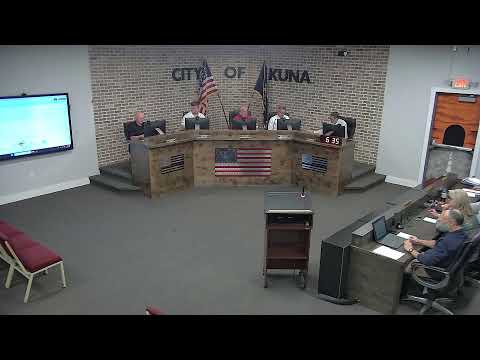
Kuna Council approves three code amendments; debate centers on home-occupation limits and adult-use provisions
Summary
The council waived readings and approved Ordinances 20-26-13, 20-26-14 and 20-26-15 to amend Kuna City Code (installation/minimum standards, sign types, and land-use definitions/unique uses). Staff explained home-occupation standards; council approved summary publications for each ordinance.
The Kuna City Council unanimously approved three ordinances amending sections of the Kuna City Code and authorized summary publication of each.
The council first waived three readings and approved Ordinance 20-26-13, which amends multiple sections of Title 5 (installation and minimum standards) and directed the clerk to publish a summary. Council members noted a typographical error on the meeting agenda and corrected the spelling of "purpose" before final approval.
Council then considered Ordinance 20-26-14, which updates requirements for specific sign types in the municipal code. The council waived three readings, approved the ordinance and approved summary publication; the roll-call polling recorded affirmative votes from council members.
Ordinance 20-26-15 addressed changes to definitions, land-use schedules and provisions for unique land uses, including home occupation accessory uses and lot-line adjustments. Doug Hansen, unit planning and zoning director, explained those home-occupation rules: "Home occupation accessory uses are things that can be done without changing the residential characteristics of the neighborhood. So you can't have signs, you can't generate a substantial amount of traffic, there can't be in-person retail visits," he said, describing the code's intent to preserve residential character.
Council members asked whether the changes were driven by complaints and pressed about provisions related to adult-oriented businesses. Hansen and other staff said the code language on adult-oriented businesses existed previously, requires permitting and distance separations from schools and churches, and was maintained for clarity and enforceability rather than because of an immediate local surge in such uses. "They're called out because jurisdictions have historically treated those uses carefully," one staff member said.
Each ordinance passed by voice and roll-call polling with the council recording unanimous "aye" votes. The council then authorized summary publication for each approved ordinance.