Get Full Government Meeting Transcripts, Videos, & Alerts Forever!
Get email alerts on the Zoning Pdc Single Family topic
No spam. Unsubscribe anytime.
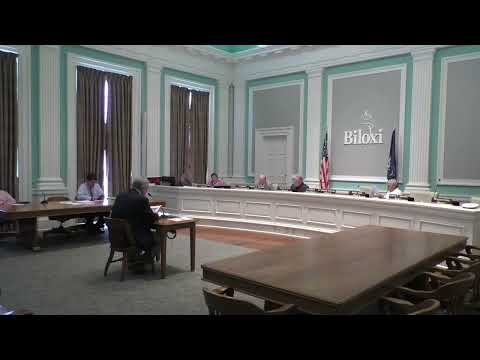
Council workshop considers allowing single-family homes in PDC overlay
Summary
City staff told the Biloxi City Council workshop that Land Development Ordinance language and the associated zoning-use table appear inconsistent, and recommended adding single-family detached homes and 0-lot-line single-family structures as allowed uses in Planned Development Commercial (PDC) overlays; council members questioned density, subdivision and prior variance approvals, citing Monarch Villas.
City staff presented a proposed text amendment to the Land Development Ordinance aimed at resolving an inconsistency between the PDC narrative and the zoning-use table and to explicitly allow single-family detached houses and 0-lot-line single-family structures within Planned Development Commercial (PDC) overlay districts.
Jerry, a city staff member, told the council that the narrative for PDCs already indicates that "limited, moderate and high density residential uses are appropriate when integrated into the development," but the table of allowed uses does not list single-family detached dwellings for PDCs. "It almost seemed to be maybe a typo" and the proposed change would add single-family detached dwellings to the PDC use list so a residential element can be incorporated into a commercial development, Jerry said.
Why the change matters
Council members asked how the amendment would work in practice and whether it would permit developers to bypass subdivision rules. Jerry said the PDC process gives applicants flexibility (setbacks, parking, density) that they must then write into a master plan that the planning commission and city council review. He told the council that "first of all, you gotta have 5 acres in order to ask for a PDC" and that developers sometimes seek variances when sites are smaller; in the Monarch Villas example, the developer asked the Zoning Board of Adjustments and Appeals for a variance and was granted one before pursuing subdivision approval.
"They applied for the variance. They went before the Zoning Board of Adjustments and Appeals...and it was granted," Jerry said, noting the subsequent subdivision and approval steps the developer followed.
Concerns from council members
Council member Creel raised procedural and eligibility concerns about past variances. "The variance shouldn't have been allowed because it wasn't eligible," Creel said, arguing that the prior Monarch Villas variance may have been improper. Jerry responded by describing the process the developer used and the review steps the project went through.
Members also asked whether allowing single-family uses in PDCs would let developers sell individual lots without returning to the council. Jerry said developers would still need to pursue subdivision approvals; the amendment would not automatically convert rental complexes into individually sold lots without following subdivision rules.
Gaming, hospitality and waterfront zoning
Council members queried why gaming establishments and certain hospitality/nightlife uses are treated differently. Jerry explained that PDGE (planned development gaming establishment) zoning and gaming commissions impose distance and buffer requirements that can conflict with adjacent single-family homes; waterfront zoning is commonly required before the gaming commission will consider an application.
Next steps
Council members did not take a formal vote on the amendment during the workshop. Discussion concluded with administrative remarks and the meeting adjourned on a 5–0 vote.
Sources: Workshop discussion and staff handouts presented by Jerry; council questions and public examples (Monarch Villas, Treasure Bay, Woolridge).