Get Full Government Meeting Transcripts, Videos, & Alerts Forever!
Get email alerts on the Jail Planning topic
No spam. Unsubscribe anytime.
Grant County leaders debate jail options and push treatment, request hard numbers
Summary
Council and commissioners extensively debated jail planning, scoping costs and treatment alternatives. Commissioners said ARPA scoping funds are exhausted and a consultant’s GMP on option 3 is expected; several members urged prioritizing treatment and community corrections over building a large new jail.
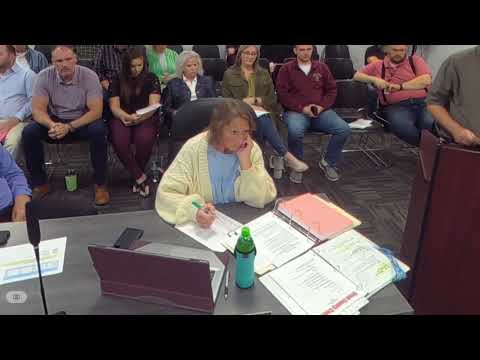
Grant County elected officials spent the bulk of Wednesday’s meeting discussing long‑running plans for the county jail and alternatives focused on treatment and reentry programs.
Commissioner Middlesworth reported that ARPA funds earmarked for scoping have been expended but that the county and consultant (BW) are finalizing a guaranteed maximum price on an Option 3 design, with hard numbers expected within days. "We should have the GMP finalized by next Friday," he said, adding that the scoping agreement has used the currently available funds.
Members and stakeholders pushed back on simply building a larger facility. Several council members and outside speakers argued the county should prioritize treatment programs, community corrections and reentry efforts instead of committing to multi‑million‑dollar operating costs for a new jail. Council members noted staff and operating estimates presented during the discussion — including a $1.81 million annual salary and benefits estimate for staffing a detention center at maximum capacity and a $330,000 annual food contract — and questioned whether staffing and operating costs make a new facility affordable.
A representative of community corrections and multiple commissioners highlighted existing programs such as Moral Reconation Therapy (MRT), reentry court and a local treatment model run by volunteers in neighboring counties. One participant said treatment inside local facilities and pretrial home detention could reduce the jail population by "at least 30" people and ease overcrowding.
Speakers urged the county to gather more precise operational numbers before committing to construction and to ask the judiciary and community corrections board to develop program models tied to a clear funding envelope. "We need to get more people out of our jail so that we're not paying all of their medical costs," one council member said, arguing for treatment and pretrial options. No formal vote was taken on construction; members agreed to continue seeking hard numbers and to involve judges and community corrections in planning.