Get Full Government Meeting Transcripts, Videos, & Alerts Forever!
Get email alerts on the Utilities Sewer Averaging topic
No spam. Unsubscribe anytime.
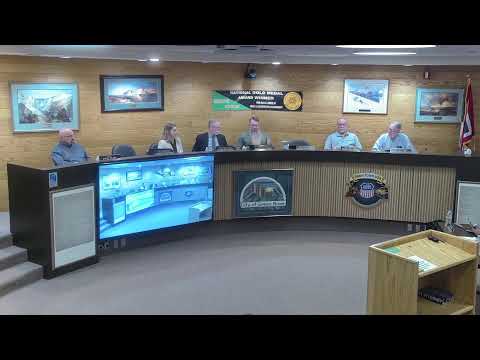
Green River council holds contentious first reading on changing sewer-billing averaging
Summary
Council debated an ordinance to rewrite how sewer-use averages are calculated for billing, with Councilman Williams arguing customers are being charged for irrigation water and staff saying the change alters calculation method, not rates; a motion to adopt a four-month winter average failed for lack of a second.
The Green River City Council spent a prolonged portion of its meeting debating a proposed ordinance to change how the city calculates sewer-use averages for customer billing.
At the start of the discussion, city staff member Chris presented the ordinance as a revision to the calculation method — "not a rate increase" — and said the council had asked for a deeper statistical analysis after earlier work on the issue. Chris said staff prepared a seven-year data set of 4,700 accounts to show how different averaging periods would affect bills.
Councilman Williams pushed back, describing customers who faced unexpectedly high bills after spring irrigation and arguing the ordinance's language that a utility "may elect" alternative billing was inadequate. "We're billing people for stuff that's not going down the sewer," Williams said. He urged the council to adopt a four-month November–February winter averaging period, saying the two paid studies recommended throwing out high months and using a four-month average.
Staff and other council members challenged that approach. Chris explained the system is designed to average over multiple months to approximate typical usage and noted the city’s billing software does not automatically exclude highs or lows without a manual process. Reed, identified in the meeting as city administrator, said five- or six-month averages had been the longstanding practice and warned changes carry trade-offs. "If you choose to wanna be billed on actuals year round, I'll be more than happy to bill you on actuals year round," Chris said, describing options but noting they are not automatic.
Council members questioned both fairness and fiscal impacts. One councilor noted the sewer utility is an enterprise fund and must remain solvent; staff emphasized any averaging change would still need to produce revenues that cover fixed costs. Councilman Kilpatrick argued the current system had worked for years, pointing to 4,700 accounts and relatively few complaints, and warned that switching methods could increase rates for other customers.
Williams made a motion to replace the proposed averaging months with November–February, but the motion died for lack of a second. The item remained in first-reading status; councilmembers and staff signaled they expect more information and further discussion before any final ordinance is adopted.
The council did not adopt the ordinance on final reading; the first-reading discussion concluded with staff agreeing to run additional scenarios and the council scheduling future consideration.