Get Full Government Meeting Transcripts, Videos, & Alerts Forever!
Get email alerts on the Tif Pilot Mechanics topic
No spam. Unsubscribe anytime.
Council members press for earlier notice as staff explains TIFs, pilots and approval steps
Summary
Council members sought earlier engagement in the vetting process; staff described how redevelopment areas are established, mailed notices and public hearings required, and how pilot/TIF durations factor into the financial model (10-year IRR assumption; trend toward shorter pilot durations).
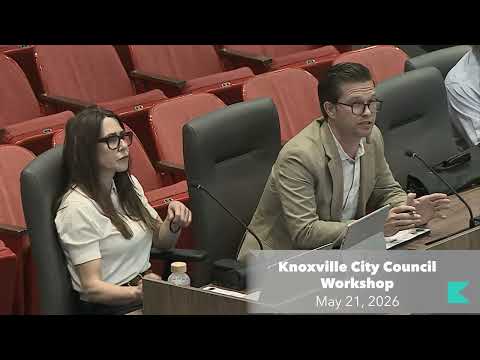
Council members used the workshop to press staff for clarity on how and when incentive negotiations and notices reach the public and district representatives.
Ben Bentley outlined the steps to establish a redevelopment area: a council resolution requesting KCDC draft the redevelopment plan, mailed notices to property owners in the area, three consecutive weeks of published notice in the Knox News Sentinel and a public hearing on the draft plan. "We notify them via mailer... 3 consecutive weeks, we publish in the Knox News Sentinel notices of a public meeting," Bentley said.
On duration and financial modeling, Bentley said the city's analysis uses a consistent framework — a 10-year internal rate of return assumption in the model that lets staff compare returns with and without incentives. He said the team has "ratcheted back" durations in recent years so property taxes start flowing sooner and cited an example where several projects will deliver roughly $4'$5 million per year in new tax revenue within a five-year horizon.
Council members asked that district representatives be looped in earlier; Justice recommended applicants notify local council members during initial conversations and use KGIS to identify district boundaries. Staff emphasized entitlement processes (rezoning, DRB) are public and commonly occur before detailed financial vetting so neighbors are informed earlier in the pipeline.
Council members also sought clarification about workforce housing requirements and how affordability phases out after a pilot; Justice said 10% to 20% workforce housing is a typical negotiation point and Bentley described graduated rent increases that can smooth transitions when pilot affordability periods end.