Get Full Government Meeting Transcripts, Videos, & Alerts Forever!
Get email alerts on the Metronet Easement Septic topic
No spam. Unsubscribe anytime.
Trustees pause MetroNet fiber work after resident warns planned route crosses septic field
Summary
A resident told the board that MetroNet markings and crews threatened a private septic field; trustees asked MetroNet to stop work, requested survey maps, and postponed any easement action until June 1.
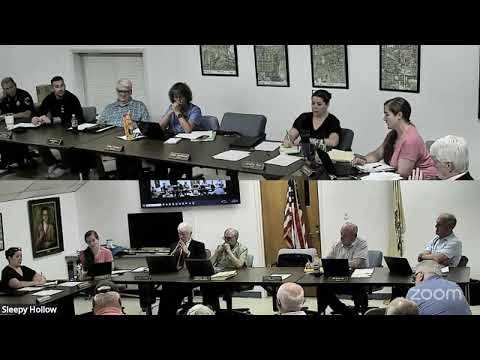
Lynn Meng told the May 18 Sleepy Hollow board meeting that flags and spray paint from public-utility locators showed MetroNet’s planned route crossing her family’s septic field and that crew members had begun work on her property. "No. You can't come here. This is not supposed to be happening," Meng said, describing how staff and a trustee intervened to stop on-site activity.
Meng said MetroNet staff earlier had described an alternative routing that would avoid the septic field but that the flags and a later work order showed the same risky alignment. She and other neighbors asked the village for technical protections and for staff to require MetroNet to use directional boring or move the alignment to existing easements.
Village staff and trustees reviewed three routing options and noted at least one existing side easement in the block. Trustees asked the village engineer to prepare plat/survey diagrams so the board could compare options with property boundaries and septic-field locations before approving any easement. The board voted to postpone action on establishing additional utility easements in the Hilltop Greenway and directed MetroNet to pause any work until the June 1 meeting.
Board members emphasized they want to protect private property and avoid damage to septic systems; staff said directional boring for main lines typically runs 36–48 inches deep while service laterals are shallower, and that MetroNet can discuss deeper service installations upon request. The board requested staff produce a clear map and legal description of any proposed easement for review prior to the next meeting.