Get Full Government Meeting Transcripts, Videos, & Alerts Forever!
Get email alerts on the Special Education Data topic
No spam. Unsubscribe anytime.
Long Beach CAC: SELPA reports LRE access short of state target and flags racial disproportionality
Summary
The SELPA director told the CAC that Long Beach Unified fell short of the state’s LRE target (64.86% vs. 67%) and that the district is reviewing hotspots of overidentification and elevated suspension rates for Black/African American students while rolling out PBIS and targeted trainings.
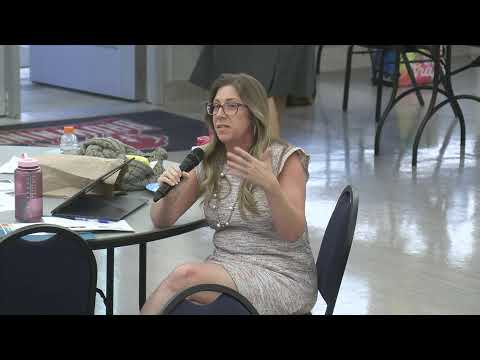
The SELPA director opened the CAC’s year‑end meeting with a data briefing on special education, saying the district’s share of students educated in the least restrictive environment (LRE) came in below the state target. “This year, the target for the state was 67% and we came in at 64.86%,” the SELPA director said.
The gap led presenters to focus on several indicators that drive state ratings and local planning. The SELPA director highlighted separate‑setting placements and child‑find work: the district reported a child‑find rate above the baseline the state expects and a higher‑than‑target rate of students in non‑public school placements. “The target for this year was 2.6% and we were close. We were at 3.24%,” the SELPA director said, noting the district will use that information to consider changes to its continuum of services.
CAC members and staff also discussed racial disproportionality. District presenters said Black/African American students were over‑identified in the emotional‑disability eligibility category and are suspended at higher rates. Staff described hotspot mapping showing concentration on the North, West and Central sides of Long Beach and said they are pursuing multiple responses: training for school psychologists to reduce assessment bias, expanded Positive Behavioral Interventions and Supports (PBIS) at elementary sites, and guidance for principals to adopt less exclusionary discipline practices.
“Just because a student is not behaving in the adult way we expect does not mean they have an emotional disability,” a district presenter said in explaining the emphasis on assessment training and non‑punitive approaches.
Staff framed the work as both compliance and civil‑rights work: presenters described the federal IDEA framework as enabling access to public education and urged CAC members to use data for advocacy, not as a deficit label. The SELPA director emphasized that data should inform supports and programs rather than define students.
What’s next: staff said the district will include these indicators in the local plan three‑year review and continue targeted training, PBIS rollout and hotspot analysis to reduce disproportionality and increase LRE access.