Get Full Government Meeting Transcripts, Videos, & Alerts Forever!
Get email alerts on the Humanitarian Crises topic
No spam. Unsubscribe anytime.
UN updates: Nigeria hunger crisis, Rohingya funding gap, Bangladesh measles surge and Colombia displacement
Summary
The UN briefed on several humanitarian crises: Nigeria faces a potential hunger crisis affecting an estimated 35 million people; the Rohingya response plan is 38% funded, leaving a $440 million gap; Bangladesh reports thousands of measles cases; and Colombia sees large numbers affected by conflict.
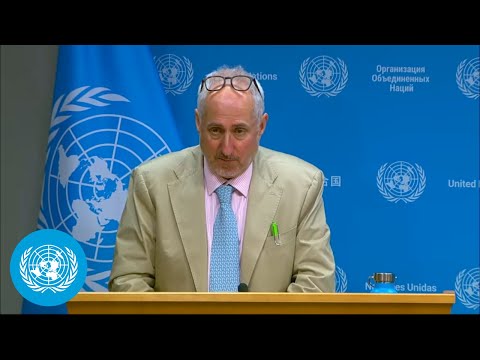
The United Nations used its briefing to update reporters on several concurrent humanitarian crises and funding shortfalls.
Nigeria: UN country teams warned of a deepening hunger crisis as the June–August lean season approaches. The press officer said nearly 1 in 7 people—about 35,000,000 nationwide—are likely to face acute food insecurity this year, with an estimated 6,400,000 children at risk of acute malnutrition. The UN and partners appealed for urgent funding for scaled-up assistance; a prioritized $516,000,000 humanitarian plan is about 40% funded with $250,000,000 received.
Rohingya: The 2026 Rohingya humanitarian response plan seeks $711,000,000 to reach 1.6 million people but is only 38% funded, leaving an approximate $440,000,000 gap, the briefing said.
Bangladesh: OCHA reported a widespread measles outbreak since March with more than 8,000 confirmed and over 57,000 suspected cases across 64 districts; 80% of cases are children under 5. Partners have vaccinated an estimated 18,300,000 children through a national campaign, but transmission remains high and additional funding is urgently needed.
Colombia: OCHA warned that fighting between non‑state armed groups has worsened humanitarian needs, affecting more than 653,000 people between January and May; partners have reached more than 200,000 people across 129 municipalities with food, water and hygiene assistance.
The press officer repeatedly emphasized urgent donor support across these crises and the operational constraints faced by humanitarian partners in accessing remote and insecure areas.