Get Full Government Meeting Transcripts, Videos, & Alerts Forever!
Get email alerts on the Fy27 Budget topic
No spam. Unsubscribe anytime.
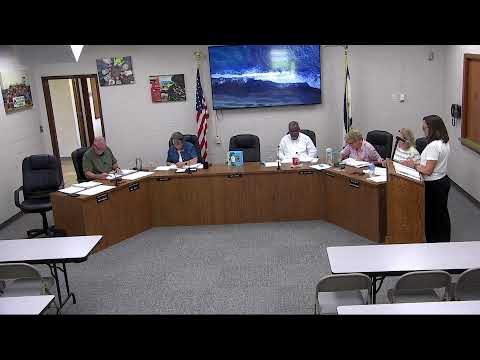
Fayette County board adopts FY27 budget amid concern over special‑education costs and charter enrollment impact
Summary
The board moved to adopt a General Fund FY27 beginning budget of about $90.44 million (combined with special revenue to roughly $101 million), while finance staff flagged enrollment declines, charter‑school funding outflows and rising special‑education spending that will pressure local resources.
Paula, the district finance presenter, walked the board through the proposed FY27 budget and the state’s 10‑step aid allocation during a detailed finance presentation.
"What you have before you is our estimated budget for fiscal year 27," Paula said, listing a general fund beginning budget of $90,439,949 and a special revenue beginning budget of $11,644,959, for a combined starting point just over $101 million.
Paula explained how the state applies a 10‑step funding formula and adjusts for charter school students; the county’s state aid for FY27 was projected at roughly $35.35 million after local levy and tax increment adjustments. The presentation noted that the district’s October enrollment count — used in the formula — was 5,050 students for funding purposes and that charter‑school enrollment (86 Fayette County addresses for the upcoming year) reduced state aid by about $740,002 for those students.
Board members pressed on personnel counts. Paula presented funded versus actual staff numbers and FTE calculations, noting the district is above state formula in several categories and that local funds currently cover roughly $4.5 million for personnel exceeding state aid formula allowances. She also described how recent changes (grade‑level aides added and CARES Act timing) affected staffing FTEs.
Members raised concerns about special education costs. The board referenced testimony at the state level that West Virginia counties face a large shortfall for special‑education services and discussed federal maintenance‑of‑effort rules that prevent reducing local special‑education spending. "If you keep going up, when we get additional funding, that would be for new programs or new positions; we cannot reduce the amount coming out of the county's budget," Paula said, summarizing MOE constraints.
After discussion the board moved to adopt the recommended budget. A motion carried, recorded as "Motion carries 4 0 1." The transcript does not list individual roll‑call votes; the chair recorded the outcome.
Later the chair requested a motion to enter executive session to discuss the superintendent evaluation; that motion was moved and seconded and the meeting prepared to move into a closed session.
The finance presentation included multiple appendices — levy rates, step‑by‑step allocations, a multi‑year staffing and enrollment trend analysis, and notes on reserves and interfund transfers — which staff said they will provide with the final budget documents.