Get Full Government Meeting Transcripts, Videos, & Alerts Forever!
Get email alerts on the Mental Health And Public Safety topic
No spam. Unsubscribe anytime.
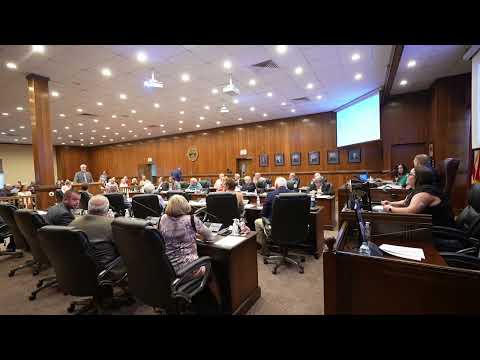
Commission approves opioid‑related jail treatment funding and a co‑response pilot with police
Summary
The commission approved a $177,043 appropriation for jail mental‑health services and a $216,000 opioid abatement award to support a clinician‑embedded co‑response program; presenters said the programs have delivered in‑county stabilization and reduced arrests.
Sullivan County commissioners voted to appropriate two lines of funding aimed at expanding treatment and crisis response for people with substance‑use and serious mental‑health needs.
The board approved $177,043 to support opioid‑maintenance and mental‑health services in the county jail. A county health official said the money pays two positions and related program costs and allowed staff to provide medication management and short‑term stabilization in the facility. "So with this money, between the months of July to February, we were able to serve 823 inmates with our mental health services," the official reported, adding that the appropriation covered 12 months of salaries for two positions and some program expenses.
Separately, the commission approved a $216,000 appropriation from the opioid abatement settlement fund to support a co‑response program that embeds clinicians with law‑enforcement responders. Bristol Police Captain Jimmy Dillard described the model and early results: "We started in January 2025. Mike and Wendy have ran over 1,200 calls. And out of 1,200 calls dealing with tons of people, we've arrested 17 people," he said, arguing the approach diverts individuals from arrest and improves follow‑up care.
Presenters said the co‑response team performs on‑scene clinical evaluation, refers people to services and conducts outreach and follow‑up; the model was described as reducing repeat calls and long transports to distant hospitals. Commissioners approved both measures under the board’s voting procedures; the votes carried and staff were asked to provide ongoing program reports to the commission.