Get Full Government Meeting Transcripts, Videos, & Alerts Forever!
Get email alerts on the Healthcare Funding topic
No spam. Unsubscribe anytime.
Sullivan County told it is ineligible for major federal rural health fund, health director says
Summary
The Sullivan County Regional Health Department told commissioners that Tennessee’s share of the federal Rural Health Transformation Fund will not cover Sullivan County because of the state’s metro‑status rules, leaving the county unable to host many new grant‑funded services.
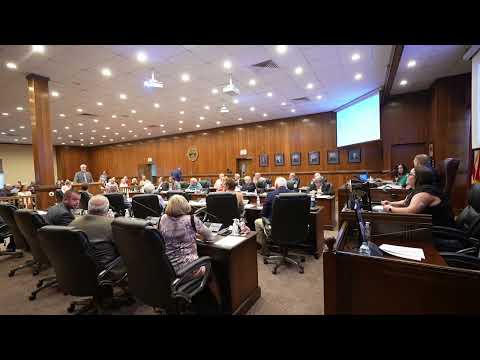
Hannah Tejmo, executive director of the Sullivan County Regional Health Department, told the county commission on May 21 that the federal Rural Health Transformation Fund offers large sums but currently excludes Sullivan County under Tennessee’s eligibility designations.
"Essentially, it's a $50,000,000,000 opportunity," Tejmo said, adding that "for the first year, the state of Tennessee has been awarded $206,888,882.11." She said the program’s criteria and the state’s metro classifications mean "89 of 95 counties in Tennessee are not eligible to receive this funding, and Sullivan County is one of those." Tejmo said the county can apply for some types of awards (for example, mobile units) but that many grants cannot be sited in Sullivan County and therefore county residents cannot directly access them locally.
The presentation sketched how the federal funds are being allocated through state priorities and a Tennessee Rural Health Care Task Force and described five eligibility pillars that narrow which projects qualify. Tejmo cautioned that the remainder of multi‑year funding will depend on project performance, so eligibility in year one will shape future allocations.
Commissioners asked questions about workarounds and emphasized a desire to pursue access without sacrificing local autonomy. Tejmo advised that while organizations can apply for certain mobile or regional projects, the county’s current designation prevents many site‑based awards; she urged county leaders to pursue state‑level conversations about eligibility and to identify alternative regional partnerships in the near term.
The presentation concluded with commissioners noting the issue’s urgency for local health care access and asking staff to bring options for follow‑up at a future meeting.