Get Full Government Meeting Transcripts, Videos, & Alerts Forever!
Get email alerts on the Body Worn Camera Policies topic
No spam. Unsubscribe anytime.
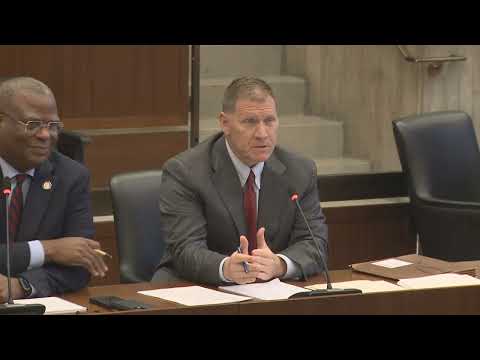
City council committee presses Boston Police on lack of timeline, access rules for body‑worn camera footage
Summary
At a May 22 hearing, councilors pressed Boston Police Commissioner Michael Cox over Rule 4.05 and the absence of a public timeline for releasing body‑worn camera footage, debated officer access to recordings before giving statements, and asked why oversight recommendations remain unresolved.
The Boston City Council Committee on Public Safety and Criminal Justice pressed Boston Police leaders on May 22 over when body‑worn and dashboard camera footage is released to the public and who can view recordings during investigations.
"When footage is delayed or withheld, especially in moments of crisis, it creates confusion, frustration, and a loss of trust," said Councilor Meniere Culpepper, the lead sponsor of the hearing, calling for a clearer, public framework for release decisions and noting that Rule 4.05 places release authority with the police commissioner.
Commissioner Michael Cox said the department follows Massachusetts public‑records law when responding to requests and that investigative exemptions will delay release if showing footage would jeopardize an active criminal investigation. "We release our body cam footage using public records law," Cox said, and noted that "if there's nothing prohibiting" release, the department will comply with public‑records requests.
Why the rules matter: Culpepper and other councilors focused on three areas—(1) whether Rule 4.05 creates a timeline or public standard for release, (2) when officers may view footage before giving statements, and (3) access by oversight panels and prosecutors. Culpepper told the panel he found no timeline in Rule 4.05 and urged the committee to consider whether a statutory or local timeline should be adopted.
Officer review before statements: Members repeatedly pointed to section 6.2 of Rule 4.05, which says officers who were involved in an incident, discharged a weapon or witnessed an incident "may view their own video before giving a statement," at a time determined by the supervisor in charge. Councilors asked whether that review can include an attorney. The department acknowledged that a supervisor or designee controls access and that, in many cases, an officer's attorney may be present "if deemed appropriate by the investigative supervisor." The commissioner also said the district attorney's office may impose additional limits in death investigations.
Oversight and prosecutors: Councilors pressed how oversight bodies such as the Office of Police Accountability and Transparency-related panels (OPAT/CRB/OPEC) access footage. Department officials said oversight panels reviewing internal affairs work have access comparable to the department's investigative materials, but they do not receive an unconditional exemption from investigative limits. Cox explained the department retrieves evidence and shares it with prosecutors; once prosecutorial authorities control evidence in a criminal case, prosecutors may determine certain disclosures, and the King family in a recent death investigation did view footage through the district attorney's office.
Volume, denials and appeals: The department told the committee that of 1,273 requests in the cited period, 722 were released and 551 denied. Common reasons for denial included ongoing investigations, privacy concerns for people depicted in footage, and statutory exemptions; denials may be appealed to a supervisor or through superior court under public‑records law amendments that can award attorney's fees.
Subpoenas and Form 26: Committee members asked about subpoenas and internal request procedures. Officials described a process in which prosecutors normally request footage directly from the video evidence unit; if an officer receives a subpoena, the officer forwards it with an internal Form 26 through the chain of command so the video evidence unit can review exemptions and determine appropriate release.
Officer‑involved shootings: Panelists said footage from officer‑involved shootings is uploaded immediately and access is restricted to a small firearms/fit investigative team. The Bureau of Investigative Services chief can expand that limited access for investigative reasons, but that restricted access is not a public release.
Oversight recommendations and discipline: Culpepper pressed the department about a May 1 letter from an oversight body saying eight cases with sustained findings awaited the department's response. Michael Cox and the department's counsel said the department responds to oversight findings but sometimes reinvestigates to verify facts and to meet legal and collective‑bargaining requirements before disciplining officers.
Next steps: Several councilors requested a committee working session to compare the 2022 body‑worn camera task force recommendations with Rule 4.05 and identify changes that could be proposed to the commissioner or through ordinance. Chair Henry Santana adjourned the hearing after noting no public testimony had been scheduled.
The committee did not take formal action or vote during the hearing; members said further review, potential ordinance language and a working session would follow.