Get Full Government Meeting Transcripts, Videos, & Alerts Forever!
Get email alerts on the County Budget topic
No spam. Unsubscribe anytime.
Lancaster County reviews administrator budget emphasizing public‑safety hires and one‑time uses of reserves
Summary
Council reviewed the administrator’s recommended budget that adds about 48.5 positions (36 in public safety), outlines $36.2 million in proposed one‑time fund‑balance appropriations, and weighs millage options ranging from no increase to a moderate raise to cover recurring costs.
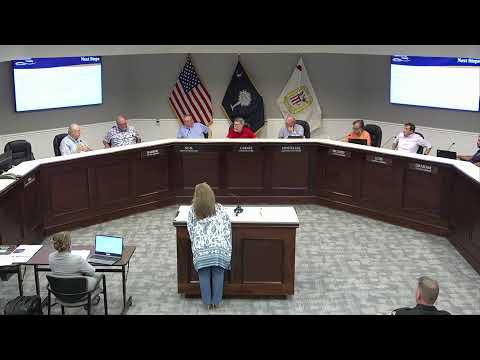
Lancaster County Council met May 19 to review the administrator’s recommended fiscal‑year budget, which centers on expanding public‑safety capacity and using a sizable portion of the county’s unaudited reserves for one‑time needs.
County Administrator Willis told the council the recommended package includes 48.5 new positions across county departments, of which 36 are public‑safety roles: a coroner case manager, 15 EMS medics, nine positions tied to shift changes, five slots for a joint EMS‑fire program presented in March, one paramedic instructor from a grant, four firefighters, two countywide firefighters, a countywide logistics officer and an apparatus technician. Willis said the proposed general‑fund cost for those positions is $4,975,002.17 and that some staffing increases reflect grants and half‑year appointments. He warned council that population growth and inflation are driving recurring costs in areas such as road paving and solid‑waste disposal.
Budget Director Jamie Provoznak walked members through packet exhibits and identified non‑personnel line‑item increases above $50,000. She said staff had removed some temporary employee lines from first reading and flagged an estimated $150,000 for printing and mailing new voter registration cards tied to a possible special election if congressional redistricting proceeds.
On reserves, staff reported an unaudited general‑fund unassigned balance of roughly $72 million and presented a proposed list of fund‑balance appropriations totaling about $36.2 million. Sabrina Harris, the county CFO, explained the $4.6 million figure staff used as a projected net addition to reserves at year‑end and noted staff had earmarked encumbrances and payroll to reach the estimate. Willis and other staff repeatedly told council that the proposed appropriations are one‑time uses that keep the county within the policy target (28–32% of general‑fund operating budget).
Council members debated how much of the short‑term needs should be covered from reserves versus recurring revenue. Staff outlined three scenarios: no millage increase (which staff said would require roughly $7 million in cuts to balance recurring operations), a modest increase to 83.5 mills to cover inflationary pressures while lowering cuts, and a larger increase (about 87.5 mills in the third scenario) to net to zero given the current list of requests.
Several councilors emphasized a public‑safety priority—urging resources for EMS, detention staff and additional fire‑service capacity—while others warned against depending on reserves for recurring pay raises or new recurring programs. Staff agreed to refine totals, identify which one‑time items could be delayed or funded differently, and return updated figures at first reading. The council also approved the meeting agenda at the start of the session and moved to adjourn at the end of the meeting.