Get Full Government Meeting Transcripts, Videos, & Alerts Forever!
Get email alerts on the Budget topic
No spam. Unsubscribe anytime.
Fire training facility and capital list draw scrutiny as council vets mayor's budget
Summary
Council members questioned trade-offs in the mayor's budget, including a proposed property-tax increase (about 12.9% proposed) and several capital projects such as a $700,000 training facility proposal and $500,000 in land for future fire stations; staff said the training facility requires more vetting and indicated it is not yet in the mayor's budget.
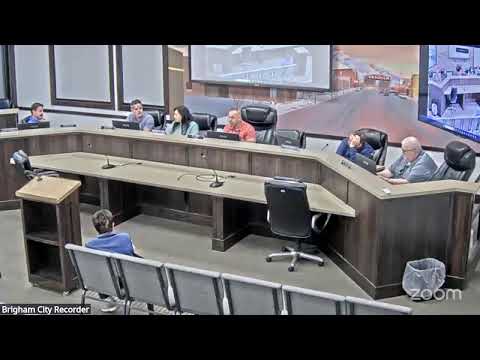
The Brigham City Council's work session on May 21 turned into a lengthy review of capital-project priorities and the mayor's proposed budget after the regular meeting.
City staff outlined dozens of proposed capital items across funds. Highlights included federal and grant-funded airport taxiway work, $100,000 in exterior repairs to the Carnegie library, a $1,000,000 allocation in the utility fund for targeted waterline upsizing, and a $1,000,000 developer-funded upgrade to the Procter & Gamble sewer lift station (the company provides the revenue for that work, staff said).
One of the more contentious topics was a proposed training facility for the fire department. Fire Chief Dawson told council the department needs a certified, NFPA-compliant live-fire and multi-story training structure to provide hands-on drills, practice for rooftop and stairwell operations, mayday scenarios, and nighttime training drills required for ISO credit. "We get as much as we can, but we get zero points for a training facility unless you have a three-story training facility," Chief Dawson said, adding that the facility could help lower the community's ISO rating over time and improve firefighter safety.
Several council members asked whether a regional or shared facility could be used instead of a city-owned structure. Staff and the chief said those options had been explored over several years with limited success; staff warned that training facilities outside the city are harder to use frequently because apparatus must travel and crews incur overtime and backfill costs.
Council members raised affordability concerns: some questioned whether the city should use fund balances and one-time general-fund capital money for new projects while also proposing a near-13% property-tax increase and the water-rate adjustments discussed earlier. Staff clarified that general-fund capital projects are typically funded with one-time fund balances and do not directly change recurring property-tax obligations, while utility funds use ongoing revenues for recurring capital needs; staff also noted the mayor's budget proposes a transfer increase from the utility fund to the general fund (from 12% to 13.5%), which affects both sides of the ledger.
Other capital items discussed: a $2.8 million (estimated) electric line relocation through Staker Parsons pit (with Rocky Mountain Power cost-sharing), continued fleet replacement (garbage trucks and police vehicles), sidewalk repair funding, and a previously discussed golf-course cart replacement program funded inside the golf fund.
Staff emphasized many projects are one-time expenditures or grant-funded, and that the proposed training facility is not being pushed into the adopted mayor's budget until the city has more detailed cost options and engineering confirmation. "That is why it's not in the mayor's budget," a staff member said, citing the need for more vetting and clearer cost estimates.
What happens next: council and staff will continue line-by-line budget review in June work sessions (June 4, a possible June 10/11 follow-up and the final property-tax decision scheduled for June 18). Staff will provide additional cost estimates and options for capital projects the council flags for potential deferral or re-prioritization.