Get Full Government Meeting Transcripts, Videos, & Alerts Forever!
Get email alerts on the City Budget topic
No spam. Unsubscribe anytime.
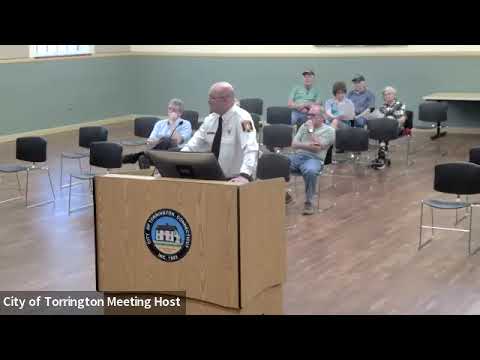
Torrington council reviews $78.8M proposed budget, adds grant manager post and debates fund‑balance use
Summary
Council reviewed a proposed $78.8 million city budget that restores some public safety funding, adds a $75,000 grant manager position, and raises concerns about rising pension and insurance costs; finance staff recommended minimal use of fund balance to preserve reserves.
Torrington city officials presented and discussed a proposed FY2026–27 city budget that would total roughly $78.8 million and restore some public‑safety funding after last year’s cuts.
The presentation broke the budget into major groupings: public safety (about $22.5 million, with police at roughly $11.45 million and the fire department next largest), public works, general government and financial obligations. Finance staff noted bond redemption and interest are driving increases in debt service and that insurance and pension costs have jumped in part because the municipal insurance pool is smaller after the Board of Education moved out of the city pool.
Council members signaled bipartisan interest in creating a grant manager position to pursue outside funding; the salary was estimated at $75,000 and staff said portions of that cost could be offset by grant reimbursements. “That’s a great addition to the city,” one council member said, noting a dedicated grant position can bring net dollars into the city treasury.
Finance staff (Erica) warned about dipping into fund balance. The staff presentation explained the city’s 7–10% fund‑balance policy and recommended little or no use of reserves this year to preserve fiscal stability. “The recommendation is to not use any of the fund balance or very limited of the fund balance this year, and kind of build that balance back up,” staff said, noting the board of finance would ultimately decide mill‑rate specifics.
Council and board members pressed for more detail on key cost drivers: rising electric bills at facilities, vehicle replacement needs (a new fire engine cited at about $1 million), and the long list of deferred capital needs such as traffic signal infrastructure. Staff said some increases reflect nonrecurring items and that they will provide additional analysis as the budget moves to the Board of Finance.
The board will present these budgets to the Board of Finance, which sets the mill rate in early June; participants emphasized the difficulty of balancing public safety needs against tax impacts and urged continued inter‑board discussions on high‑cost items.