Get Full Government Meeting Transcripts, Videos, & Alerts Forever!
Get email alerts on the Budget Reconciliation topic
No spam. Unsubscribe anytime.
Lawmaker warns reconciliation shortcut will undercut appropriations, calls bill a 'gold plated billion dollar ballroom boondoggle'
Summary
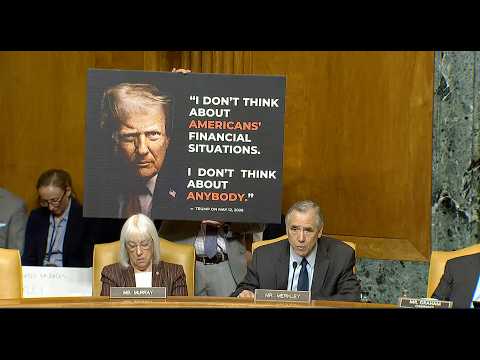
At a Senate Committee on Appropriations meeting, a lawmaker said they will oppose a reconciliation bill that bypasses the regular appropriations process, criticizing its priorities — including a lavish White House ballroom and added ICE/CBP funding — and citing $103 billion in unobligated funds and family budget strain.
A lawmaker speaking at a Senate Committee on Appropriations meeting said they will oppose a pending reconciliation measure and warned that using reconciliation to bypass the regular appropriations process would damage the Senate’s budgetary norms.
The lawmaker said the bill does little to help families facing higher living costs and instead contains “a gold plated billion dollar ballroom boondoggle,” and additional money for immigration enforcement. “Operation Epic Fury has turned into Operation Epic Failure,” the lawmaker said, tying the administration’s foreign-policy choices to rising energy and consumer prices.
Why it matters: The lawmaker framed the dispute as both policy and procedural. They argued reconciliation is being repurposed away from its original deficit-reduction role and toward routine spending, a shift that would make partisan bypassing of committee-based negotiations more likely. That, the lawmaker said, would make bipartisan compromise on spending less achievable.
Details and claims: The speaker said they had held nine town halls across eastern Oregon and heard constituents’ concerns about high prices, noting gasoline prices “over $5 a gallon” and diesel for farm tractors “over $6 a gallon.” They cited year-over-year inflation at 3.8% and said families are relying on credit cards to cover basics.
The lawmaker criticized prior tax legislation and cited large debt projections, saying past tax bills may add on the order of $30 trillion to federal debt over 30 years (or as much as $50 trillion under a higher-interest scenario, as stated by the speaker). They also named specific elements in the reconciliation package — the White House ballroom project and additional funds for Immigration and Customs Enforcement (ICE) and Customs and Border Protection (CBP) — and questioned whether such spending is urgent given what the speaker described as roughly $103,000,000,000 in unobligated agency balances.
The speaker placed the issue in institutional context, recounting that reconciliation was created in 1974 for deficit reduction and warning that a 1996 parliamentarian ruling expanded its reach. “Once you change the use of the process… both parties are going to take use of it,” the lawmaker said, arguing that precedent matters as much as contents.
The meeting record does not show a final vote in the excerpt; the lawmaker stated the committee was facing a vote on whether to forward the product to the floor and declared they would oppose doing so.
Next steps: The lawmaker said they would oppose forwarding the bill to the full Senate. Any formal committee vote or final disposition is not recorded in the provided transcript excerpt.