Get Full Government Meeting Transcripts, Videos, & Alerts Forever!
Get email alerts on the Student Engagement topic
No spam. Unsubscribe anytime.
Student-led ‘Rambassadors’ program aims to build belonging across Cheshire elementary schools
Summary
High school students and staff told the Cheshire Board of Education about a student-led outreach program that trained roughly 35–40 student leaders to visit every elementary classroom and teach simple practices (the “Hello 20–10” rule, awareness and involvement) to foster belonging.
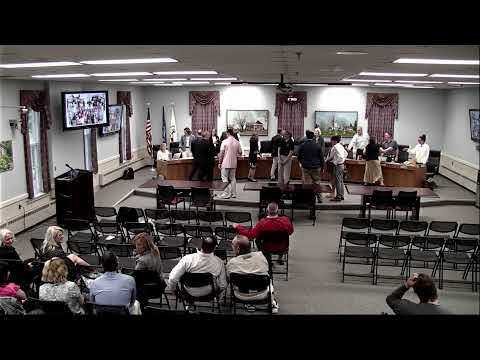
Chester High School students and staff presented a district showcase to the Cheshire Board of Education on a student‑led program designed to strengthen belonging and connection among younger students.
Assistant Principal Dr. Maureen Reed and teacher Sarah McGrimley described the team’s approach: training staff and students through a Student Voice Institute, convening small focus groups across grades and student populations, and analyzing recorded responses to identify themes. "We wanted to learn more about what helps CHS students feel like they belong at CHS," Reed said, describing efforts to include open‑choice students and those with IEPs in the focus groups.
Sarah McGrimley, an art teacher who attended the outside training, said the program stressed clarity about whether feedback would inform decisions or simply be shared back with students, and emphasized coding student responses to produce objective themes. "In my 25 plus years in education, this is one of the best trainings I've had," McGrimley said, explaining why the team designed careful, open‑ended questions and validated themes with students.
Dan Lee, who leads the peer health educator program, described the logistics of recruiting and training the high‑school Rambassadors. "Once we established the group of students — which I think was probably about 35 or 40 students — we tapped into the resources of the peer health educator program," Lee said, detailing how the older students learned presentation skills and handled scheduling, transportation and principal outreach.
Student leaders laid out the Rambassadors’ mission and three practical themes they taught to K–6 students: "Share a smile," "Be aware," and "Be involved." Junior Kiro demonstrated the Hello 20–10 rule — "see the person, recognize them from about 20 feet, and at 10 feet say hello" — as a simple, low‑effort practice the students could adopt in hallways.
Students also shared personal stories of outreach. Hunter described inviting a new student into his lunch group; Aisling said one welcoming moment from a peer turned her into a long‑term friend. Maeve and Sydney recounted founding a mental‑health club inspired by the nonprofit Morgan's Message and described activities (stress‑relief events, dedication games) used to reduce stigma.
Student leaders reported visiting every elementary classroom in the district and said the visits produced immediate, visible effects: students waved in hallways and raised hands with ideas such as a multicultural snack club. "We actually were able to speak to every single elementary classroom in the district," a student presenter said, describing the district‑wide reach.
Board members and parents praised the presentations. Parent and board member Krollauer said her 7‑year‑old came home "raving" about the visit and said he intended to use the practices he learned. Board members applauded the student presenters’ communication skills and the program's alignment with the district strategic plan.
When asked whether the program would continue, students and staff said leadership would transition to next year’s students; the program would likely be adjusted rather than discontinued, and staff discussed potentially extending elements to middle school.
The meeting concluded with a motion to adjourn that was seconded and approved unanimously.