Get email alerts on the Chna Chip Reform topic
No spam. Unsubscribe anytime.
Advisory board votes to keep CHNA/CHIP work local, pursue hybrid model
Summary
The St. Clair County Advisory Board of Health voted to stop commissioning external contractors for the community health needs assessment (CHNA) and community health improvement plan (CHIP) and to pursue an in-house or hybrid approach, directing staff and the medical director to negotiate a new process and to include the medical director in community coalition meetings.
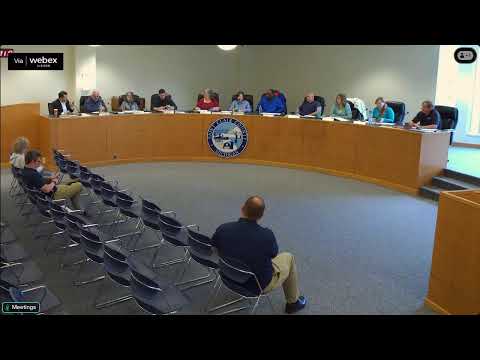
The St. Clair County Advisory Board of Health voted to stop contracting an outside firm to conduct the county’s next CHNA and CHIP and instead pursue a hybrid or in-house model for setting public-health priorities.
The motion, made by a board member (speaker 1), directed the board, the health officer and the medical director to negotiate a hybrid approach and to ensure that community input remains part of the process. After discussion, the chair called for a voice vote and said, “That motion carries.”
Why it matters: board members and the medical director argued the CHNA/CHIP process as previously contracted produced expensive reports that in practice benefited outside groups and sometimes failed to identify issues county residents now raise in public meetings. Dr. Remington Nevin, the county’s medical director, told the board he has concerns that outsourced assessments can be “captured by special interests” and proposed returning more of the priority-setting work to department staff and the advisory board.
What the board discussed: speakers reviewed costs and past RFPs (previous proposals ranged, the transcript shows, roughly $75,000–$250,000), the time needed for behavioral risk-factor surveys, and whether the county should seek national accreditation (not required). Staff said last CHNA work used a mix of stakeholder surveys and a behavioral risk-factor survey; health-department staff described expanded internal data capacity and the feasibility of producing a comparable product with targeted primary data collection.
Outcome and next steps: the board approved the motion (voice vote). The vote was not recorded as a roll-call in the transcript. Dr. Nevin said he will prepare memos outlining proposed priorities, methods and a hybrid process; the board asked staff to ensure the advisory board’s involvement in subsequent CHNA/CHIP meetings and to report back on options for data collection and budget impacts.
Action at a glance: - Motion: not commission a CHNA or CHIP with an outside agency and proceed through negotiations for hybrid models to obtain public-health priorities for St. Clair County (moved by speaker 1). - Outcome: motion approved (voice vote; chair announced "That motion carries.").
The advisory board left open how much primary data collection it will perform in-house, whether behavioral risk-factor surveying will be replicated, and how to finance the hybrid approach; staff noted some funding sources (previous grant support and opioid-settlement dollars) that have been used for CHNA work in prior cycles.
The advisory board also passed a related motion to communicate that the medical director should be included in community coalition and CHIP meetings so the board can receive direct, documented feedback from those discussions.
AI generated
The text on this page is AI generated. Summaries, highlights, analysis, and video transcripts are all produced from the original source material.
AI can make mistakes, so if you spot one, and we will fix it for everyone.
Note: the source content is unaltered by us. Any content source we link to, be it a video, an audio recording, or a document, is presented exactly as its publisher released it. That publisher is usually a government body, sometimes an individual official or another organisation.