Get Full Government Meeting Transcripts, Videos, & Alerts Forever!
Get email alerts on the Public Space Management topic
No spam. Unsubscribe anytime.
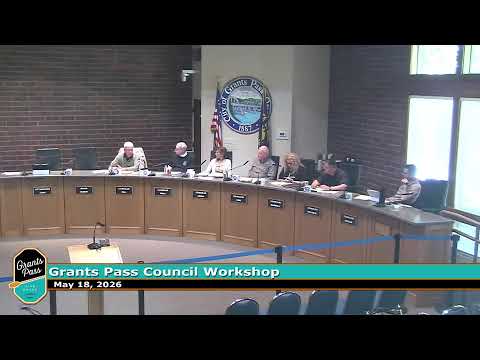
Grants Pass council approves six-month pilot for Owl Plaza events, sets notice, fees and temporary food-truck restriction
Summary
The council approved a pilot events policy for the new Owl (Alta) Plaza that requires 45-day notice, tightens cleanup to 12 hours, sets sample fees and bans food trucks for six months to give downtown businesses time to evaluate impacts.
The Grants Pass City Council approved a pilot policy to govern events at the new Owl (Alta) Plaza, setting notification, fee and operational standards and imposing a temporary restriction on food trucks.
Dana, the city’s urban renewal authority manager, presented staff recommendations for two tiers of plaza use: Tier 1 (closure of the Outlot parking area) and Tier 2 (larger footprint including closure of 5th at G and H and alley space). Staff proposed fees, a refundable security deposit, a possible electricity fee and extra staffing costs for street closure with bollard installation.
After extensive discussion about impacts on nearby H Street restaurants, the council adopted a motion that includes several changes from staff proposals: applicants must provide 45 days’ notice and the city will use multi-channel notification (email/text/door-to-door) to inform adjacent businesses; post-event cleanup will be tightened to a 12-hour target to restore parking quickly; staff will treat the first six months as a pilot period and review results; fees were adjusted in the motion (examples used in debate included a tier-1 full-day fee of about $350 and a tier-2 full-day fee of $500); and food trucks will be prohibited for the initial six-month pilot so brick-and-mortar businesses can adapt.
Councilors expressed two principal concerns. Downtown business representatives warned that allowing food trucks at prime locations during events could siphon customers from brick-and-mortar restaurants; several councilors asked staff to protect business spillover benefits and to limit the number and timing of closures to reduce disruption. Staff and some councilors pushed back, noting that the plaza’s electrical capacity and other limits would naturally constrain truck activity, and that some events (such as Cruise the Rogue) plan to rely on downtown restaurants rather than food trucks.
The council amended the motion on the floor to allow up to six large (tier-2) closures during the pilot period, and ultimately approved the pilot policy by roll call vote.
What happens next: staff will implement the notification list for adjacent businesses, finalize the fee schedule and deposit rules, and return with an evaluation at the end of the six-month pilot or sooner if issues require immediate council review.