Get Full Government Meeting Transcripts, Videos, & Alerts Forever!
Get email alerts on the Budget topic
No spam. Unsubscribe anytime.
Goshen board pledges to rework budget and aims for June 16 revote after voters reject proposal
Summary
After district voters rejected the proposed 2026 budget, the Goshen Central School District board outlined statutory deadlines for a June 16 revote, warned that a contingency budget would require roughly $1.7 million in cuts and heard sustained public demand for restored classroom staffing and a transparent superintendent search.
The Goshen Central School District Board of Education moved on Thursday to prepare a revised budget for a revote after voters rejected the district's proposed budget at the first ballot.
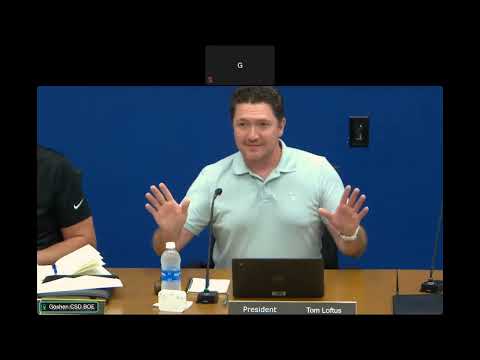
At the meeting President Loftus and Interim Superintendent Tom Bonjovi told the board and residents that New York State law sets a uniform revote date of June 16. Bonjovi walked through statutory deadlines the board must meet, including completing the revised budget at least seven days before the public hearing and publishing required legal notices (Bonjovi cited June 2 and a second notice by June 9 as benchmark dates). "June 16 is the uniform budget re vote date," Bonjovi said, noting the district must make revised budget copies available to residents 14 days before the revote.
Nut graf: The board said it will attempt surgical changes to the proposal rather than defaulting to a contingency budget, which would revert the district to the prior year's tax levy and eliminate some spending. "The contingency budget, you have to go back to the prior year's levy," Bonjovi said, adding that contingency-level reductions could amount to "approximately 1,700,000" from the current proposal.
Board members and the public pressed for targets and transparency. Trustee speakers emphasized that contingency should be a last resort and urged staff to "sharpen the pencils" and identify disproportionate line items, especially administrative costs and any nonessential equipment. Assistant Superintendent for Business Raymond Van Damren told the board staff would analyze recent state aid language; he said the state was discussing an additional 1% in foundation aid that might yield roughly $217,000 but that staff needed time to compute net changes once enrollment and data captures are processed.
Public commenters urged a student-first approach. "Overall, this budget failed because it did not put our students first," said Jacob Gardner, a community member, arguing voters rejected the proposal to protect classroom programming and teacher positions. Students also spoke: Brennan Bannes, a sophomore at Goshen High School, told the board that extracurriculars teach lessons not covered in textbooks and urged passage in a possible revote to protect programs and sports.
Multiple residents called for steps ahead of the revote: targeted line-item reductions, a community forum to solicit input beyond social media, and clearer information about the superintendent search. "A rigorous, transparent superintendent search with genuine community input" was one specific request from commenter Heather Raffery Zabata. Board members responded that they would seek more granular reports, including principals' assessments of any staffing shortfalls, to help decide which positions should be restored or trimmed.
The board also received routine fiscal reports: Van Damren stated April expenditures were about $9.9 million, cited approximately $110,000 in reimbursements for homeless student tuition and roughly $116,000 in interest earnings; he reported the general fund had spent $74.5 million (76.9% of the budget) through April, with $85.2 million (91.8%) in anticipated revenues.
The board did not vote on adopting a contingency budget at the meeting. Members signaled they would schedule special meetings and expedite staff analysis so a revised budget could be posted within the statutory timeline and brought to voters on or before the June 16 date. The board adjourned to other business and later entered executive session for personnel matters.
Next steps: the board expects staff to return with suggested line-item adjustments, a clearer estimate of state-aid changes, and principal-level reports on the operational impact of recent staffing reductions ahead of any revote.