Get Full Government Meeting Transcripts, Videos, & Alerts Forever!
Get email alerts on the Disaster Response Relocation topic
No spam. Unsubscribe anytime.
Senate Committee on Indian Affairs chair urges federal lead agency to coordinate Alaska village relocations after Typhoon Halong
Summary
The chairman of the Senate Committee on Indian Affairs recounted a two‑day field hearing in Western Alaska after ex‑Typhoon Halong, described catastrophic village damage and evacuations, and urged a single federal lead and streamlined funding to support tribal relocations and recovery.
The chairman of the Senate Committee on Indian Affairs called for a single federal lead and simpler funding to help Alaskan tribal communities relocate and recover after the devastation of ex‑Typhoon Halong.
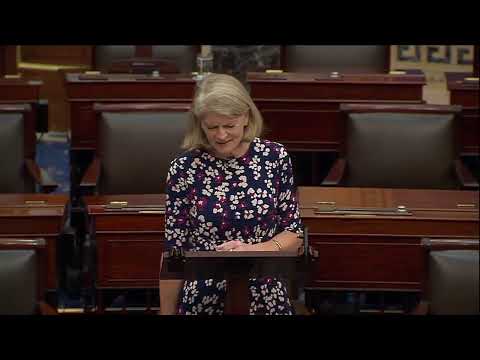
Speaking on the Senate floor, the chairman summarized a two‑part field hearing he led in Alaska and said the storm — which he described as crossing roughly 100,000 square miles with winds over 100 mph and storm surge up to 25 miles inland — left villages such as Kipnuk and Quigilingoc severely damaged and hundreds of residents evacuated to Bethel and Anchorage.
The hearing mattered because it put tribal leaders’ accounts and on‑the‑ground assessments before federal officials and lawmakers. The chairman said testimony and site visits showed that existing federal programs and funding streams are fragmented and often do not permit the kind of flexible, community‑led relocation many villages want.
He described the scale of damage he witnessed in Kipnuk — including boardwalks and homes lifted from pilings, sewage lagoons breached and contamination of subsistence areas and cemeteries — and quoted evacuee experiences to illustrate human costs. “It’s hard to describe the devastation,” the chairman said, recounting his visit and the sight of homes and even caskets carried away by the storm’s currents.
The chairman said evacuees face additional challenges after evacuation: language barriers, limited access to subsistence resources, school transfers and social stresses in urban shelters. He cited reports from the field that at least two young people who relocated had taken their own lives, and said others had struggled with substance abuse and homelessness after evacuation.
Drawing on past relocation experience, the chairman pointed to the Newtok land exchange enacted in 2003 that authorized a community move to a new site (referred to in testimony as Maktarvik) and said that even successful relocations can take a generation and leave lingering housing and facility shortfalls. He urged Congress and federal agencies to treat relocation as an integrated process — from mitigation and pre‑disaster planning to recovery and, where chosen by communities, relocation — rather than as a series of narrow grants requiring years of piecing together funding.
As concrete examples, the chairman said the Denali Commission, while well placed regionally, lacks sufficient funding to address relocation needs, and he noted a Bureau of Indian Affairs award of $16,700,000 to a community resilience program in “Chifornack” (as described in the hearing) as helpful but not adequate. He called for a centralized federal vantage point to pool experience and coordinate infrastructure hardening, mitigation, disaster response, recovery and relocation.
The chairman also credited agency participation at the field hearing, including the assistant secretary for Indian Affairs, and said his office will continue working with Alaska communities, the state and federal partners to pursue a more nimble system that respects community preferences.
The chairman concluded by asking colleagues on both sides of the aisle to engage on solutions and said his staff will continue follow‑up with tribal leaders and federal agencies to chart next steps.