Get Full Government Meeting Transcripts, Videos, & Alerts Forever!
Get email alerts on the Broadband topic
No spam. Unsubscribe anytime.
Volo says county broadband construction is underway but easements and ARPA timelines remain a risk
Summary
Volo Broadband told the Champaign County Board that phase 1 fiber construction is under way and targets customer hookups by September, but the company and board members flagged the difficulty of acquiring rural easements, supply uncertainties for electronics, and the need for tight ARPA spending schedules.
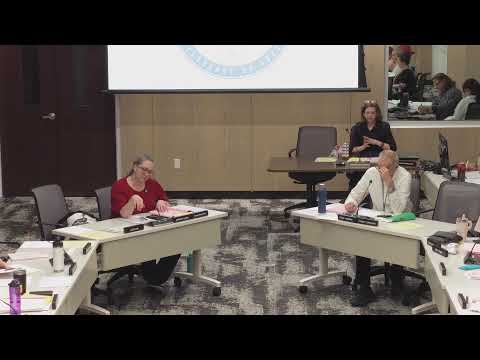
Peter Folk of Volo Broadband told the Champaign County Board on May 21 that construction on the county’s rural broadband backbone is under way and that the company expects underground work to continue through July with customer hookups into September. The presentation reviewed funding for the project’s phases — about $4.7 million in county ARPA funds for a phase and roughly $7.1 million of state funds for phase 1 — and described a multi-phase plan to extend fiber to underserved rural premises.
Why it matters: The board has committed millions in ARPA money to broadband projects with spending deadlines tied to federal guidance. Board members repeatedly pressed Volo for firm milestones and accounting to ensure the county will meet ARPA deadlines and not be forced to return funds.
Folk said phase 1 needed roughly 550 easements (he later clarified a final count of about 562) from rural property owners and that easement acquisition was the program’s biggest challenge. “The biggest problem was getting to actual contact with the people,” Folk said, describing a year-long outreach effort to reach an 80% easement acceptance threshold needed to begin construction in many areas. On phase 2 he said the team expects to need about 650 easements and that work has only just started.
Board members pressed Volo on timing and contingency plans. One board member asked whether the county’s $4.7 million for phase 2 would realistically be spent this year given the time required for easements and potential eminent-domain proceedings; a board member with easement experience said contested eminent-domain cases can take a year. Folk replied his team believes it can accelerate the process, noting that their earlier easement round reached about 50% in two months once they refined outreach and staffing. He also said attorneys expect an expedited eminent-domain path where needed.
Folk described a separate housing-focused component (VCHAP) that will provide donated internet service to about 50 housing-authority units — eliminating those residents’ monthly internet bills for a planned five years, with the goal of making the benefit permanent. “The plan is to permanently eliminate that bill,” Folk said, while acknowledging the financial model is currently framed over five years.
On technical and procurement risk, Folk said most construction materials are on hand but the project lacks a firm delivery date for some network electronics, which could affect the final completion date. He also highlighted the project’s outreach tools — above-market easement payments, a ground-penetrating radar system for drainage tile mapping and insurance on file with road commissioners — to reduce property-owner objections and protect landowners from construction damage.
What’s next: Board members asked county staff for more frequent updates and more detailed invoicing and spending reports; one board member asked for weekly updates to ensure the ARPA spending schedule can be met. Volo said it will work with county staff to provide a more concrete timeline and to consider adding staff or partners if needed to speed easement outreach.