Get Full Government Meeting Transcripts, Videos, & Alerts Forever!
Get email alerts on the Code Enforcement topic
No spam. Unsubscribe anytime.
Soledad outlines code-enforcement wins and limits: $189,000 paid to shelter dogs, staff say more legal capacity needed for complex cases
Summary
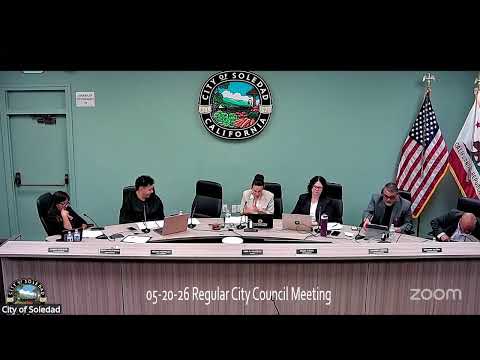
Police/code-enforcement staff told the City Council on May 20 that they handled 2,615 code-related contacts year-to-date, paid $189,000 to the SPCA for dog sheltering in FY25-26, and face operational constraints caused by limited CSO staffing, seasonal call spikes and legal support shortages for receivership and complex abatement cases.
City code-enforcement leadership briefed the council May 20 on FY25-26 accomplishments, challenges and next steps, emphasizing voluntary-compliance strategies, interdepartmental coordination and program gaps.
Chief (code enforcement/police) described core enforcement areas—substandard housing, chronic nuisance properties, illegal parking and RVs used as living units, animal control, weed abatement and zoning violations—and said staff prioritize voluntary compliance before formal enforcement. He reported year-to-date activity numbers, including roughly 693 code-enforcement contacts, 600 parking citations/warnings and 548 vehicle-abatement contacts for a combined total of 2,615 contacts, and reported that the city paid about $189,000 to harbor dogs at the SPCA in the current fiscal year.
Beatrice (community and economic development staff) outlined coordinated efforts with public works, housing and fire, and noted specific operational results: 59 parcels were identified for weed abatement this season and 35 complied voluntarily. Staff highlighted several successful rehabilitation and abatement cases (including long-running hoarding and a rat-infested property that was subsequently cleaned and rehabilitated).
Officials said the program is hampered by limited staffing—two to three community-service officers handle a high volume of calls—and by limited legal mechanisms for swift administrative enforcement or receivership actions. They recommended (and council endorsed advancing) a municipal-code review to add clearer administrative citations, pursue a specialized legal resource for complex receivership and cost-recovery work, expand public education, and explore partnerships or grant-supported programs to help seniors or low-income homeowners with yard maintenance.
What happens next: Staff will pursue code updates and explore options for targeted legal support, data improvements for grant competitiveness and community outreach to reduce repeat violations.