Get Full Government Meeting Transcripts, Videos, & Alerts Forever!
Get email alerts on the Transportation Safety topic
No spam. Unsubscribe anytime.
Soledad Youth Council urges crosswalks, lighting and grant applications in 'Safer Streets, Safer Futures' plan
Summary
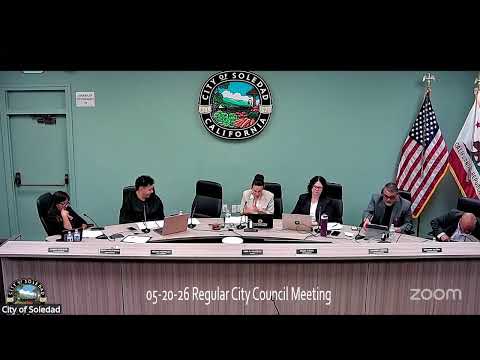
Soledad's youth council presented a Safer Streets, Safer Futures initiative to the council on May 20, citing local collision data and recommending crosswalk upgrades, pedestrian signals and annual grant pursuits (ATP, HSIP) plus quarterly coordination with Public Works.
The Solidarity Youth Council presented the Safer Streets, Safer Futures initiative to the City of Soledad on May 20, outlining data-backed street-safety priorities and near-term steps for grant pursuit and engineering improvements.
Giovanni Bravo and fellow youth commissioners summarized five years of collision data (the council presentation referenced Monterey County Vision Zero data) identifying 90 serious-injury crashes in Soledad and noting higher-than-average pedestrian-severity outcomes. The youth Council identified priority intersections—Monterey/Park, French Street, Metz/Orchard and Third Street—where faded crosswalks, missing markings and limited visibility present hazards for students and park users.
Recommended fixes included re-striping and repainting crosswalks and bike lanes, installing pedestrian crossing beacons or signals, adding central street lighting and stop legends and exploring curb extensions. The youth council emphasized public outreach and proposed quarterly coordination meetings between youth commissioners and Public Works to identify funding priorities and update the city's five-year CIP.
Public Works staff told the council that several of the youth-identified locations are already included in grant applications and that two of the locations may be in design with funding expected either this year or next. The youth council also said it will support grant applications by documenting site assessments and public engagement.
What happens next: Council members thanked the students and asked staff to align the youth recommendations with ongoing grant applications and CIP priorities; staff agreed to follow up and confirm which projects are funded and in design.