Get Full Government Meeting Transcripts, Videos, & Alerts Forever!
Get email alerts on the Public Safety topic
No spam. Unsubscribe anytime.
Soledad residents, firefighters urge approval of Measure A to shore up understaffed fire and emergency services
Summary
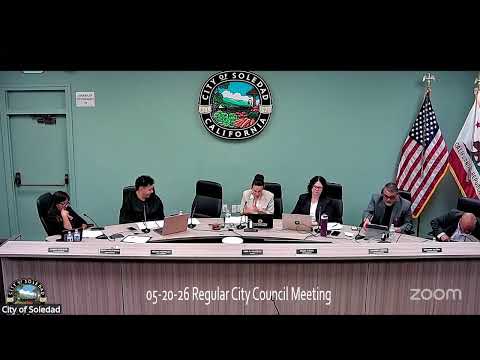
At the City of Soledad's May 20 meeting, several residents, former volunteer chiefs and healthcare leaders urged voters to support Measure A, a proposed parcel tax dedicated to fire protection and emergency medical services, citing chronic understaffing, long ambulance response times and built-in local oversight.
Public comment at the City of Soledad's May 20 council meeting focused heavily on Measure A, a proposed special parcel tax the city says would fund fire protection and emergency medical response.
Greg Stevens, a longtime volunteer firefighter and former volunteer fire chief, described staffing levels when he served and said current resources fall far short of needs. "We now can staff one engine company. That's not enough," Stevens said, urging residents to consider the risks of longer response times and understaffed crews.
Lorenzo Sanchez, who identified himself as a Soledad resident and volunteer firefighter, said Measure A was "a local investment in our community" that would pay for staffing, equipment and training while remaining restricted to fire and emergency-response uses. "These are accountability measures built in—independent audits and oversight ensure the funds are spent exactly as promised," he said.
Other callers and written commenters echoed those concerns. Jose Arriola, a 15-year Soledad resident, noted the rural context: "We are a rural community located roughly 30 minutes from the nearest hospital," and said reliable local emergency response can "literally mean the difference between life and death." Written commenters David Garcia and Henry Ventura Jr. said they had already voted in favor of Measure A and warned of higher insurance rates and longer response times if the city did not invest in emergency services.
Ida Lopez Chan, who identified herself as CEO of the Salt Lake Community Healthcare District, said the district's board supported the measure as a way to ensure robust, effective emergency services and protect life and property. "Without additional funding, we risk compromising the very safety that we all cherish," she said.
City staff and council members did not take further action on the ballot measure during the meeting; the public-comment period served to collect community input ahead of the election. Several council members acknowledged the testimony and noted the budget and staffing implications would be considered as Measure A proceeds to voters.
What happens next: Measure A remains a ballot question. Public discussion at the council meeting supplied the record of support and described potential uses and accountability mechanisms for the proposed tax.