Get Full Government Meeting Transcripts, Videos, & Alerts Forever!
Get email alerts on the Public Health Regulation topic
No spam. Unsubscribe anytime.
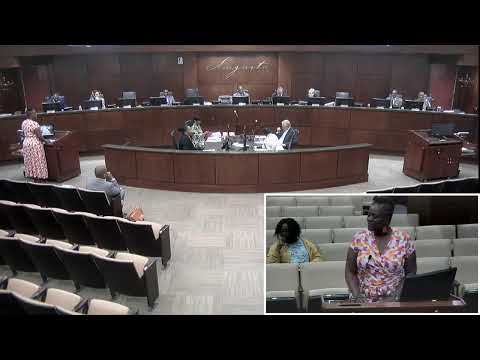
Augusta commission tasks attorney to draft ordinance to allow hookah in 21+ bars
Summary
After testimony from downtown business owners, the commission voted to ask the city attorney to draft an amendment that would allow indoor hookah smoking in licensed bars and lounges restricted to patrons 21 and older; the attorney said any ordinance would require two readings.
Augusta commissioners on May 21 directed the city attorney to draft an amendment to the local indoor-smoking ordinance that would allow licensed bars and lounges that restrict entry to patrons 21 and older to permit indoor hookah (flavored tobacco) service.
Business owners from downtown venues — including Jeremy Halls of Miami Vibes, Dennis Abrams of Tribeca Lounge and Alton Webb of Status Bar and Lounge — told the commission the current ordinance creates an uneven playing field. They asked the city to align the local rules with exemptions in the Georgia Smoke‑Free Air Act that permit smoking in establishments that limit access to adults.
"We're simply asking Augusta Richmond County to align more closely with the state law," Jeremy Halls said, arguing the change would preserve public‑choice, keep entertainment dollars local and enable fair competition.
Commissioners raised public‑health and enforcement questions. Commissioner Lonnie Wimbley noted that hookah uses tobacco and that indoor ambient smoke remains a concern, asking whether restaurants or family establishments would be affected and whether the change would reintroduce indoor smoking to broader public spaces.
City Attorney Jim Plunkett said staff would prepare a draft ordinance, likely with options the commission could weigh (for example, whether to limit hookah to bars and lounges that are strictly 21+). He noted the drafting process typically requires two readings before adoption.
The motion to task the legal department with preparing a proposed ordinance carried; the transcript does not record a roll‑call tally for that motion. If the commission moves forward, staff said they will return a proposed ordinance with potential limitations and implementation details.
Next steps: legal department to draft proposed ordinance for consideration at a future meeting. The attorney said the draft will include definitional clarifications and consequences and will be presented for the commission to decide whether to proceed to first and second readings.