Get Full Government Meeting Transcripts, Videos, & Alerts Forever!
Get email alerts on the Food Services topic
No spam. Unsubscribe anytime.
School City of East Chicago outlines plan to bring food services in‑house, cites USDA cuts and projected savings
Summary
District food-services leader told the Board of Trustees the School City of East Chicago will move food operations in‑house July 1, citing reduced USDA commodity support and an estimated $200,000–$250,000 in annual savings from eliminating outside management fees.
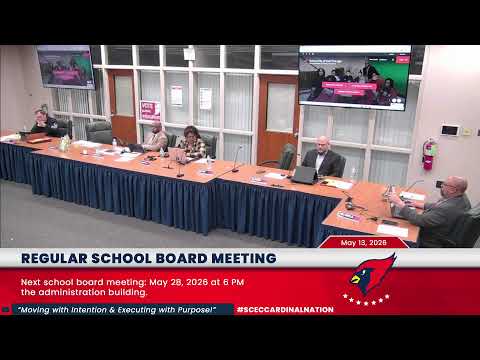
Mike Hill, who presented the School City of East Chicago’s annual food services report, told the board on May 13 that the district’s food operation is a self‑supporting enterprise under U.S. Department of Agriculture (USDA) rules and does not draw on the general fund. Hill said the program has served about 600,000 meals year‑to‑date and currently holds cash on hand above the USDA‑allowed six months of operating reserves to prepare for a transition to self‑operation.
Hill told trustees the majority of the department’s revenue comes from USDA reimbursements tied to meal participation and from modest sales, while main costs are food and labor. He said USDA commodity allocations, which offset purchases, provided roughly $288,000 this year but are expected to be cut by roughly half next year, increasing the district’s exposure to food‑cost inflation.
On staffing and operations, Hill said current employees who work for the contracted food‑service management company will be given the opportunity to apply for district positions and that the district intends to start those hires July 1. He said some contract line items — a contract fee of about $98,124 through March and a roughly $3,000‑a‑week payroll processing charge — would be eliminated when operations move in‑house. Hill estimated those changes and efficiencies would yield roughly $200,000–$250,000 in annual savings, “assuming there’s not a massive fluctuation in food cost.”
Trustees pressed for documentation: Trustee Smith asked for a printed breakdown of costs and savings; Hill said that material had been provided and offered to bring additional printouts. Board members also asked how the district will ensure regulatory compliance; Hill said USDA requires districts to have a food service director who oversees procurement, menus, nutrition standards (including sodium targets and vegetable subgroup requirements) and the financial integrity of USDA funds.
Hill said the district will keep summer feeding, after‑school snack programs and other sites covered by the district’s food service fund, and described a plan to serve preschoolers in classrooms using mobile carts. He also said he would continue to coordinate student feedback by setting up a food‑services email and by working through site leads and student councils.
The presentation ended with trustees asking for a month‑to‑month financial dashboard in the finance committee and a request that Hill provide the board with a printed program breakdown. No formal board action to finalize the operational change was recorded at this meeting.