Get Full Government Meeting Transcripts, Videos, & Alerts Forever!
Get email alerts on the Edtech Screen Time topic
No spam. Unsubscribe anytime.
Parents and teachers urge Portland school committee to curb screen time and regulate AI in classrooms
Summary
Multiple parents and educators told the Portland Public Schools Policy Committee on May 18 that one‑to‑one Chromebooks and unregulated AI use are harming student wellbeing, and the committee signaled it will develop a draft policy, hold a town hall and open a public comment period.
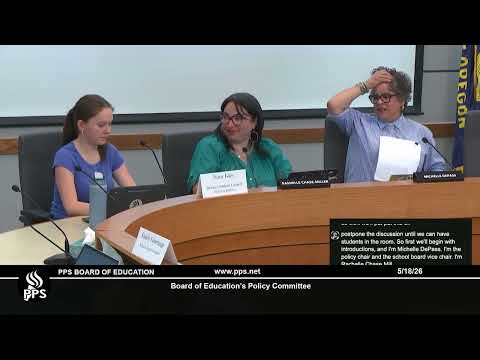
PORTLAND, Ore. — Parents, teachers and a student told the Portland Public Schools Board of Education’s Policy Committee on May 18 that district devices, learning apps and emerging AI tools are creating safety, privacy and learning concerns that the district should address.
"Just in the past 2 weeks, I've deleted hundreds of gaming files from my sixth grader's PPS Chromebook," parent and family physician Holly Hoffkamp told the committee, describing a 34‑page document she said circulates at a middle school that lets students bypass safeguards. Hoffkamp said device access has led to "problematic media use," anxiety and family conflict and urged the district to "decrease device use in schools."
Roosevelt teacher Chris Schweizer told the committee staff and trustees that school employees and parents have asked for limits on AI and ed‑tech. Schweizer described petitions he said were presented in January — "over 100 employees and parents" on one submission — and an ongoing community petition he said has "over 500 signatures," and urged the district to craft policy that slows AI rollout rather than leaving decisions entirely to individual teachers.
Other public commenters urged the district to examine how apps and monitoring tools are configured and whether students' data are shared. Allison, a child therapist and parent, said she found on the district’s Securely monitoring app a rules tab that initially listed "sexual content" as allowed for her child and urged clearer controls and transparency. Another parent said a TumbleBooks clip that showed graphic content was available to elementary students.
District staff and committee members said they are not voting on a policy tonight but will draft language, seek staff and community input, route proposals through legal review and provide an opportunity for public comment. "We will probably seek input from a variety of parents," Chair Michelle DePass said, and members noted plans for a town hall and a minimum 21‑day public comment period once a draft is released.
Emily Courtnage, district staff, summarized the Section Two package earlier in the meeting and confirmed staff are reviewing a draft screen‑time policy; she said the document will come back to policy committees after legal review and public notice.
The committee did not take formal action on screen time or AI at the meeting; members described this session as the start of a public process to consider policy changes. The district website will carry policy drafts and instructions about how to submit comments once the review period opens.