Get Full Government Meeting Transcripts, Videos, & Alerts Forever!
Get email alerts on the Student Wellbeing topic
No spam. Unsubscribe anytime.
Spark Wellness asks Regional School District 12 to re-administer developmental relationships survey for grades 6–12
Summary
Spark Wellness presented a proposal to re-administer the Search Institute’s Developmental Relationships Survey to grades 6–12 to build longitudinal data; presenters said parents are notified and students may opt out, and board members asked about including social‑media questions and how results will inform advisory and curriculum.
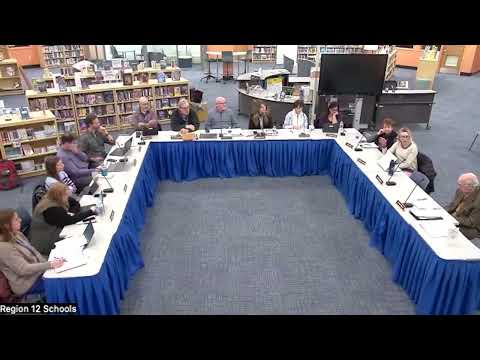
At the Jan. 12 meeting of Regional School District 12, Paula Conway, identified in the record as president of Spark Wellness, presented the Developmental Relationships Survey (Search Institute) and asked the board to approve re-administering the instrument to students in grades 6 through 12 to create longitudinal data.
Conway described the group’s mission as to “promote self‑advocacy, resilience, and connection in order to improve mental health, reduce substance misuse, and enhance quality of life,” and said Spark Wellness worked with schools two years ago to administer the same survey. Conway said the district previously received survey results in April (after a February administration) and that the data were used to inform programming, assemblies and advisory lessons.
A colleague (identified in the transcript as Mike) explained that the survey includes core items and optional modules; the board asked whether modules address social media, screen time and gambling. Conway and Mike said social‑media or device‑specific items are not part of the core instrument they reviewed, but the Search Institute offers additional modules and the presenters said they could request module additions; they noted the organization has been responsive to input.
Conway described the opt‑out process: parents are notified, may review survey items in the school, and may opt students out. Presenters said very few students declined in the prior administration (they estimated “a small number, two to four students” may have opted out) and that no parents requested opt‑outs in the earlier deployment.
Board members asked about how results are used. Presenters said the district uses results to guide advisory lessons, schoolwide programming and curriculum adjustments (for example, to check vaping content in health classes), and to tailor assemblies and counseling supports.
Board discussion included requests to ensure survey materials and grade/age ranges are clear in the packet (one board member asked to remove references to grades 4–5 and ages 8–10 if those are not included) and to provide a follow‑up report after results are analyzed. Conway said the group plans to return with findings after the survey cycle.
What happens next: Board members asked staff to confirm which optional modules are included and to bring back any changes; presenters said they would seek reprinting of a student artwork calendar sample and return to a future meeting for distribution.