Get Full Government Meeting Transcripts, Videos, & Alerts Forever!
Get email alerts on the Water Infrastructure topic
No spam. Unsubscribe anytime.
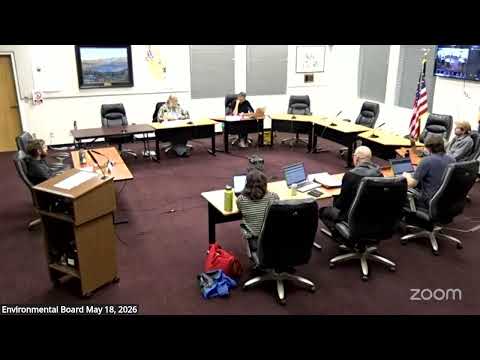
Town staff warn of tight summer flows, outline pump power-backup plan after grant denial
Summary
Town staff told the Environmental Board that Crystal River runoff peaked higher than expected and that, without backup power at the Roaring Fork treatment plant and well houses, water restrictions could escalate this summer; staff said a DOLA grant request for $750,000 was denied and they are considering diesel generators and later renewable backup.
Scott, the town staff liaison, told the Environmental Board that Crystal River runoff peaked higher than forecasts but is expected to fall rapidly, likely producing extreme low flows by early July and raising the prospect of voluntary — and possibly mandatory — water restrictions this summer.
Scott said staff have been coordinating with water-rights specialists on supplemental supply plans and emphasized that keeping Nettle Creek online is the town’s top priority. He told the board that the town pushed a 90% design for a planned expansion of the Roaring Fork Treatment Plant to DOLA for a $750,000 grant but “they told us to go home empty-handed,” and that without that funding the project will be deferred.
The denial will change near-term priorities, Scott said: town staff are likely to pursue power-backup options for critical treatment infrastructure to avoid outages that would force rapid conservation actions. He described the immediate plan for backup power at well houses as most likely to involve diesel generators because the town does not own the land where some well houses sit; Scott gave an estimated load of roughly 150 kW per well house (about 300 kW total) and said a renewable option at the plant itself would be explored later.
Scott also reported progress on two major projects — the Roaring Fork Treatment Plant and a well house — are functionally complete, with only minor punch-list items remaining, and noted the wastewater system has three wells back online for the first time in a year.
Board members asked about the prospect of rationing and about how planned utility outages on red-flag fire days could interact with treatment-plant power vulnerabilities. Scott said outages tied to Holy Cross and Xcel planning could quickly trigger stricter conservation, underscoring the need for backup generation.
The board heard additional operational updates: the town will receive an electric sewer-camera van used for acoustic and visual inspections of sewer lines, Scott said, noting the purchase cost was about $270,000 and that it will help identify maintenance that avoids larger system failures.
The board did not take formal action on these items; staff indicated they will return with more detailed options and cost estimates for generator and backup plans and with any changes to project timing once grant opportunities are revisited.