Get Full Government Meeting Transcripts, Videos, & Alerts Forever!
Get email alerts on the Early Childhood Specialist topic
No spam. Unsubscribe anytime.
Cheshire board debates new early‑childhood specialist role, grant oversight and staffing trade‑offs
Summary
Board members discussed a proposed non‑teaching early‑childhood specialist to coordinate pre‑K transitions, coach staff, and support the Smart Start grant; members debated duties, representation at state meetings, union classification, and budget trade‑offs.
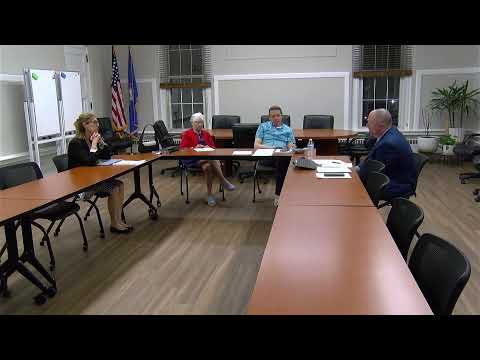
The Cheshire Board of Education continued discussion on May 18 about a proposed early‑childhood specialist role intended to support the district’s pre‑K and birth‑to‑three work, coordinate Smart Start grant activity, and coach teachers and paraprofessionals.
Board members described the position as non‑teaching and not responsible for formal personnel evaluations; instead, they said it would focus on coaching, family liaison work, transition coordination between early‑childhood programs and kindergarten, para scheduling, and grant coordination. One board member summarized the proposed role as "not a teaching position, nor would it be an evaluation position," emphasizing coaching and collaboration with building administration.
Marlene, a board participant, urged clarity on grant coordination: the specialist could coordinate Smart Start activities and attend state meetings but should not be the sole administrator submitting grant materials. "I think that's administrative... coordinating the Smart Start grant. I know what you're saying that her business might be — but this isn't a department chair, so to speak," she said.
Members discussed whether administrators or the specialist should represent the district at Office of Early Childhood meetings. Several board members recommended initially sending both an administrator and the specialist or teacher representative to build shared understanding of state expectations.
Labor relations and classification were raised: the district reported having consulted both teachers’ and administrators’ unions. Members described the role as a hybrid between teacher leader and administrator and discussed implications for internal posting, external recruitment, and whether the assistant principal should hold a special‑education or early‑childhood certification.
Budget and operational trade‑offs were a central line of debate. One member noted alternatives for the funds (instructional supplies, STEM, or elementary Spanish) and asked whether the specialist adds FTE. District staff explained the proposal aims to reassign existing positions and reallocate staff, not necessarily add net FTE; they argued early intervention and close supervision of pre‑K programs can reduce costly interventions later and better preserve student progress.
Board members asked the administration to revise the draft job description to remove language implying evaluation responsibilities, to clarify that budget management would be collaborative with building administration, and to ensure the role’s scope and representation at state meetings are explicit. The committee said it will present the revised proposal and budget implications to the full board on Thursday for further action.
The committee adjourned after confirming the early‑childhood staffing and the candidate recommendation would go to the full board this week.